
![2027: ‘Justice Lifu must go protest’ rocks Abuja [PHOTOS]](https://gazettenaija.blog/wp-content/uploads/2026/06/1002491380-150x150.jpg)






As Nigeria moves closer to the 2027 general elections, it is important to remind all the actors involved in this process to act in a responsible manner and not engage in any untidy or sharp practice that may raise doubts or anxiety about the integrity of the elections. An impression that our democracy is under assault in any form whatsoever is enough to derail the exercise and create a perception of wrong-doing or deliberate mischief. In particular, two recent developments relating to the judiciary – the Justice Peter Lifu case in the matter of the proposed deregistration of the African Democratic Congress (ADC), Accord Party (AP) and 3 other political parties; and then the decision of the Federal High Court, Lokoja sitting as an appeal court over its 10 December, 2025 decision on the registration of the Nigeria Democratic Congress (NDC). Both are unfortunate, especially as the judiciary is considered a temple of justice whose officers are expected to be above suspicion like Caesar’s wife. The judex have a bounden duty to cloak their judgements with the clean garment of fairness, impartiality and justice, no matter whose ox is gored. They are not to descend into the arena. But it is now more fashionable than ever for litigants and observers alike to impugn the integrity of our courts. They claim to know our judges. The pervasive perception is that a Nigerian judge can be bribed, and the judiciary which is supposed to be an independent arm of government has now been joined at the hips with the machinations of the Executive, the ruling party, or the highest bidder. The injury is self-inflicted. The rule of law is threatened in the eyes of the ordinary man on the street.
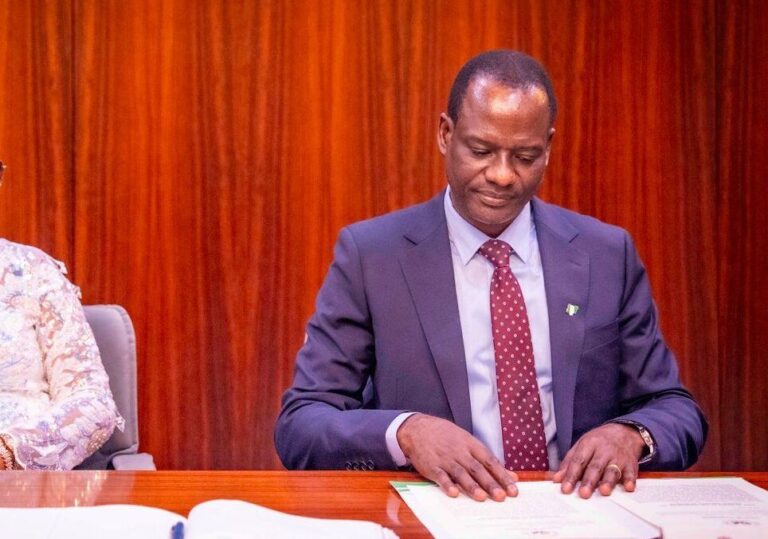
In the Justice Peter Lifu case, it is argued that the learnt Judge of the High Court simply overruled an earlier decision of the Court of Appeal, delivered on 22 May to the effect that the suit – Incorporated Trustees of NFFL vs. INEC & Ors (FHC/ABJ/CS/2637/2027) which was filed by the National Forum of Former Legislators at the Federal High Court, Abuja requesting the deregistration of five political parties, for failing to meet necessary performance thresholds to be registered, should be put on hold. Justice Lifu’s court ignored the Court of Appeal and went ahead to deliver judgment, directing INEC to deregister the political parties. It was a very angry Court of Appeal taking up the matter subsequently that accused Justice Lifu of brazenly violating “the hierarchy of courts”, thus committing “the gravest form of judicial misconduct”, in fact “judicial rascality.” The Appeal Court has now adjourned until 7 July, for the hearing of the appeal and to enable parties in the suit to file and exchange their briefs of argument.
It would be difficult to argue that Justice Peter Lifu acted, without being aware of the previous decision of the Court of Appeal. There is also the matter of whether or not the former legislators had a locus standi in the matter. It would appear that the Nigerian Supreme Court prefers a more liberal approach to a strict approach on the subject of locus standi particularly where public interest is involved in pursuit of the protection of public rights (Centre for Oil Pollution Watch v. NNPC, Fawehinmi v. Akilu) or where the issues raised concern the interpretation of the Constitution (Attorney General of the Federation v. Abubakar, Inakoju v. Adeleke; AG Ondo State v. AG Federation). However, some lawyers may well prefer a restrictive approach which will require the litigant to demonstrate the specific injury or damage that he or she may have suffered, and the arguments on this and allied issues were canvassed in court. Justice Lifu’s decision rested largely on his reading of Section 225A of the 1999 Constitution, which gives INEC the authority to register or deregister political parties, with a view to “sanitizing the political space.” But was there any prior scrutiny by INEC, due diligence and investigation by INEC to ascertain the claims against the five political parties or was it merely enough to consider the claims by third-party litigants?
Curiously, the learned judge seemed to have anticipated the response he received subsequently from the Court of Appeal when in his conclusions, he wrote inter alia that:
“If any party wants to suspend the operation of an order fixing a case for judgment, they must seek specific order staying the effect of those orders. Fixing a case for judgment is an order of Court. That order is still extant. In my considered view, this is the implication of the Court’s decision in the case of Zenith Bank Plc vs. John (2015)…Moreover and more importantly, the National Judicial Council by a circular …dated 16th June, 2025 directed as follows:-

Henceforth, matters that have reached an advanced stage or have been adjourned for judgment should not be transferred, irrespective of complaint by any of the parties”
“The implication of the above directive is very discerning to a legal mind. Judgment of a Court should not be delayed or stayed or suspended. The judex is a man under authority. He complies implicitly with superior directives particularly as a public servant and judicial officer in line with his oath of office. In the absence of any specific order putting on hold the judgment of the Court coupled with the fact that there is no inferred abuse of Court process and counsel has adopted all their processes while the Court has statutory time to deliver its Judgment, I hold that there is no legal impediment to the delivery of the Judgment of this Court.”
The Court of Appeal thinks otherwise, relying exclusively on the principle of the hierarchy of courts and its own intervention. The Superior Court pointedly accused Justice Peter Lifu of “judicial rascality.” The public and the affected parties think that judicial rascality as alleged must not just be talked about, it must be sanctioned. But here is Justice Peter Lifu quoting the authority of the National Judicial Council. Is the NJC superior to the appellate Court when no wrongdoing has been established against it? There are many Nigerians out there who believe that there is more than meets the eye in Justice Peter Lifu’s judgment and this is where the Nigerian judiciary runs into troubled waters again and repeatedly. Mr Atedo Peterside succinctly summarises this general public sentiment when he wrote in his X handle that “the cure for judicial rascality is disciplinary action. Glossing over rascality whilst relying on Appeal Courts alone to overturn obnoxious judgments encourages more judges to go into the lucrative business of delivering procurable obnoxious judgments”. The very suggestion that judges are running “a lucrative business” and that they can be “procured” is more the reason why steps must be taken to protect the integrity of the same institution that is described as the “last hope of the common man.” The NJC is saddled with the assignment of ensuring the discipline of judges. Is the NJC asleep or awake? The word “rascality” should never be used together in the same phrase with the judiciary. This is the main problem. Nigerians have become so skeptical they are even now saying that the people should not expect impartiality from a judiciary that has been over-motivated with mansions as official residence in Abuja and elsewhere.
My inclination is to defend the judex and assume that they may well be victims of group libel and/or blackmail, precisely because it would be an overkill to tar the entire judiciary with the same brush. But there is trouble with this submission when you consider the kind of somersault that we have now just witnessed in the Federal High Court in Lokoja on the matter of the eligibility of the Nigerian Democratic Congress (NDC) as a political party. The alleged culprit in this case is Justice Isa H. Dashen who has now overturned an earlier judgment delivered on December 10, 2025 by the same court ordering the Independent National Electoral Commission (INEC) to register the NDC. It has now suddenly occurred to the Federal High Court in Lokoja that its earlier decision was constitutionally defective because the Peace Movement Party (PMP) was not joined, hence denied a fair hearing, and the NDC which was registered had stolen the PMP logo. On Friday, the Court said the NDC should be de-registered, the status quo should be restored, pending when all legal issues are resolved, and INEC, the NDC, and the PMP should be joined as parties. This is extremely shocking. The NDC as a political party and its leaders have screamed out loud and clear that they will be rushing to the Court of Appeal because there has been a miscarriage of justice and that Justice Dashen’s judgment was arrived at per incuriam, that is in error, more so as it appeared to have acted as an appellate court over its own judgment. By so doing, the court exercised a jurisdiction that it did not have, jurisdiction being the bone, pith and marrow of the judicial process.
The general rule in Nigeria is that once a court has already delivered a final judgment in a case, it is already rendered functus officio on that particular matter. In other words, it no longer has the power to modify a final order it already made. It cannot act as an appellate court over its own decisions (Adegoke Motors Ltd. vs. Adesanya). The same principle about the hierarchy of courts indicated in the earlier case reviewed, also applies here, and that is why an appellate court assumes the authority to review decisions made by the lower courts. It is trite law that there are exceptions to this and in this particular matter, the rule will apply to (a) circumstances where the earlier summary judgment was obtained by fraud. There is no clear evidence that the Federal High Court judgment directing INEC to register the NDC in December 2025 was obtained by fraud (b) where the defence has a meritorious case for non-appearance and judgment was entered, but again that didn’t happen in this case, (c) where judgment was given without service on the main party; (d) where a miscarriage of justice can be established, (e) where there has been a lack of jurisdiction, the fons et origo of the entire process, and (e) where there have been clerical mistakes, ambiguities or errors requiring clarification, that is the slip rule. Without all of this being established, the Court of Justice Dashen constituted itself into an Appeal Court, and acted as a judge and jury in its own case and decided that the matter of the PMP must be addressed de novo. The main issue is the right to fair hearing. Incidentally, the PMP is not even a registered political party in Nigeria. If the PMP insists, as it does that the NDC used its two-finger victory logo, the best it could have done would have been to file a suit for “passing off” and the Court could have in the circumstance ordered that the Nigeria Democratic Congress (NDC) should change its logo.
Beyond legalese, there is also something to be said for discretion and proportionality. What is proper in the eyes of the right-thinking, reasonable members of society? What is fair? If the PMP was denied fair hearing, the appropriate place to go would have been the Appeal Court. The NDC was registered as a political party, its officials were restored. The party has taken part in electoral processes to date: membership registration, party congresses and primaries, due submissions to and interactions with INEC, the emergence of candidates, the emergence of Presidential candidates only for a Court in Lokoja to show up and upturn all of that. The judge should have been more circumspect, given the tense political atmosphere in the country. The case is now before the Court of Appeal. The NDC leadership is convinced that the party will remain on the ballot, and that there has been a miscarriage of justice and an abuse of court process by the Federal High Court in Lokoja. There are clear legal issues that the Court of Appeal would address: whether or not the court was functus officio, whether or not there has been an abuse of court process and whether or not the process/outcome is sound in law? The Court will do its work and hopefully expeditiously, and so we wait.
Meanwhile, it is being argued that the two cases cited above about the eligibility or validity of opposition political parties and their bona fides can be traced to the Tinubu administration’s plan to impose a one- party state on Nigeria. At least two Presidential candidates claim that there is a grand plan to stop them at all costs because they constitute a threat to Tinubu. The leadership of the ADC and the Labour Party have also expressed misgivings about the courts. This is the perception. But in reality, Tinubu may not even be the one interfering in every instance. He may in fact be innocent and it could be the system overreaching itself or certain unscrupulous agents acting in Tinubu’s name, in a bid to leave nothing to chance. The best that the President can do as a leader is to leave the institutions of state better than he met them and for it to be said that he gave democracy a chance, and allowed peace, justice, and fairness to reign no matter the odds. The stability of the country should be more important to all political gladiators. The judiciary must be above reproach. Where allegations of outright misconduct can be established against judges, sanctions must be applied to sustain public trust and the rule of law.



![2027: ‘Justice Lifu must go protest’ rocks Abuja [PHOTOS]](https://gazettenaija.blog/wp-content/uploads/2026/06/1002491380-768x576.jpg)