






The World Bank-supported HOPE Governance Programme has approved the disbursement of $27m in performance-based incentives to states that successfully achieved the Year Zero Disbursement-Linked Results (DLRs), with top-performing states receiving up to $3m each for meeting governance and public finance reform targets.
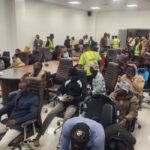
The National Coordinator of the HOPE Governance Programme, Dr. Assad Hassan, announced the incentive package on Tuesday during a retreat for Commissioners, Permanent Secretaries and Directors of Budget and Planning from the 36 states and the Federal Capital Territory (FCT) in Abuja.
According to Dr. Hassan, the disbursement followed the findings and recommendations of the Interim Independent Verification Agent (IVA), which assessed the performance of participating states against the programme’s Year Zero Disbursement-Linked Indicators (DLIs).
He said the incentive scheme was designed to reward states that met key governance reforms in budgeting, financial transparency and accountability in the basic education and primary healthcare sectors.
The National Coordinator explained that the Year Zero assessment covered four key Disbursement-Linked Results.
These include DLR 2.1, which required states to adopt comprehensive guidelines for the preparation and submission of consolidated work plans for state basic education budgets by March 31, 2025; DLR 2.2, which focused on similar guidelines for state primary healthcare budgets; DLR 2.3, which required local governments to adopt harmonised budget guidelines and chart of accounts; and DLR 4.1, which assessed the publication of the 2025 Citizens’ Budget for Basic Education and Primary Healthcare by February 28, 2025.
For DLR 2.1, Bayelsa, Borno, Kano, Kebbi and Yobe states qualified for $1.5 million each after meeting the programme’s requirements.
The same five states also qualified for another $1.5m each under DLR 2.2, making them the biggest beneficiaries of the performance-based incentive under the first two indicators.
Under DLR 2.3, Adamawa, Bayelsa, Borno, Delta, Gombe, Kano, Plateau, Taraba and Yobe states will receive $500,000 each for ensuring that their local governments adopted harmonised budget guidelines and chart of accounts.
For DLR 4.1, Abia, Bayelsa, Borno, Edo, Ekiti, Enugu, Imo, Jigawa, Kano, Kebbi, Kogi, Nasarawa, Ondo, Plateau and Yobe states qualified for $500,000 each after publishing their 2025 Citizens’ Budgets for Basic Education and Primary Healthcare within the stipulated deadline.
Explaining why several states missed out on the incentive, Dr. Hassan said they either published the required guidelines after the March 31, 2025 deadline, failed to satisfy most of the stipulated conditions, or did not publish the required documents on their official state websites.
He also identified weak institutional coordination as a major obstacle to implementation in several states.
According to him, the inability to establish institutional coordination mechanisms undermined institutional ownership and threatened the sustainability of the programme.
Dr. Hassan disclosed that the Interim Independent Verification Agent was working to conclude the second phase of the Year Zero verification exercise by July 2026.
Highlighting the programme’s objectives, he said the HOPE Governance Programme seeks “to maximize utilization of Federal and State funds at facility level for Primary Health Care and Basic Education; promote transparency and monitoring of intergovernmental transfers and expenditure for the two sectors and strengthen execution of coordinated annual plans for PHC and Basic Education.”
He added that the programme also aims to “strengthen accountability of PHC and Basic Education expenditure and close staffing gaps by hiring and deploying teachers and priority PHC workers across the states.”
Dr. Hassan further revealed that the programme had commenced preparations for implementing a capacity-building action plan that would provide hands-on technical support to help states improve their performance and meet future programme targets.
The HOPE Governance Programme is a $500 million World Bank-supported initiative domiciled in the Federal Ministry of Budget and Economic Planning.
It is designed to improve the availability and effectiveness of financing for basic education and primary healthcare, promote transparency and accountability in public spending, and strengthen the recruitment, deployment and performance management of teachers and primary healthcare workers by the federal, state and local governments.