







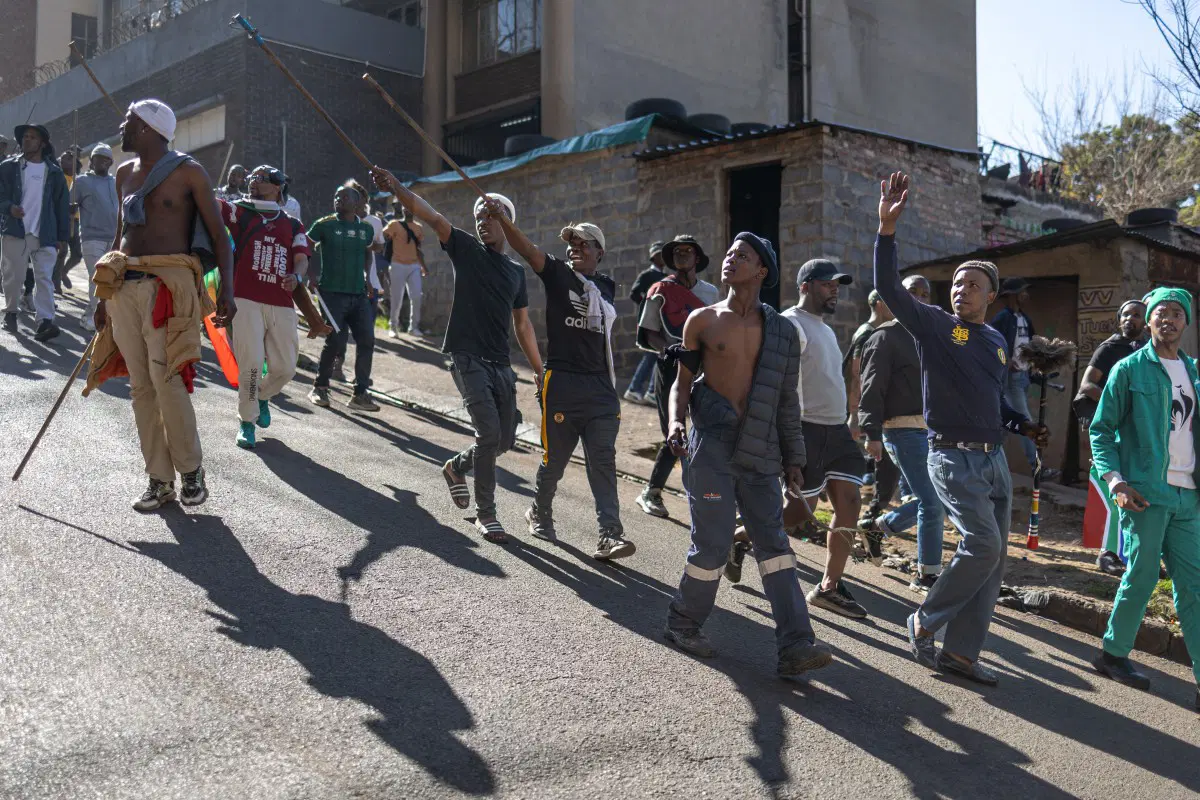
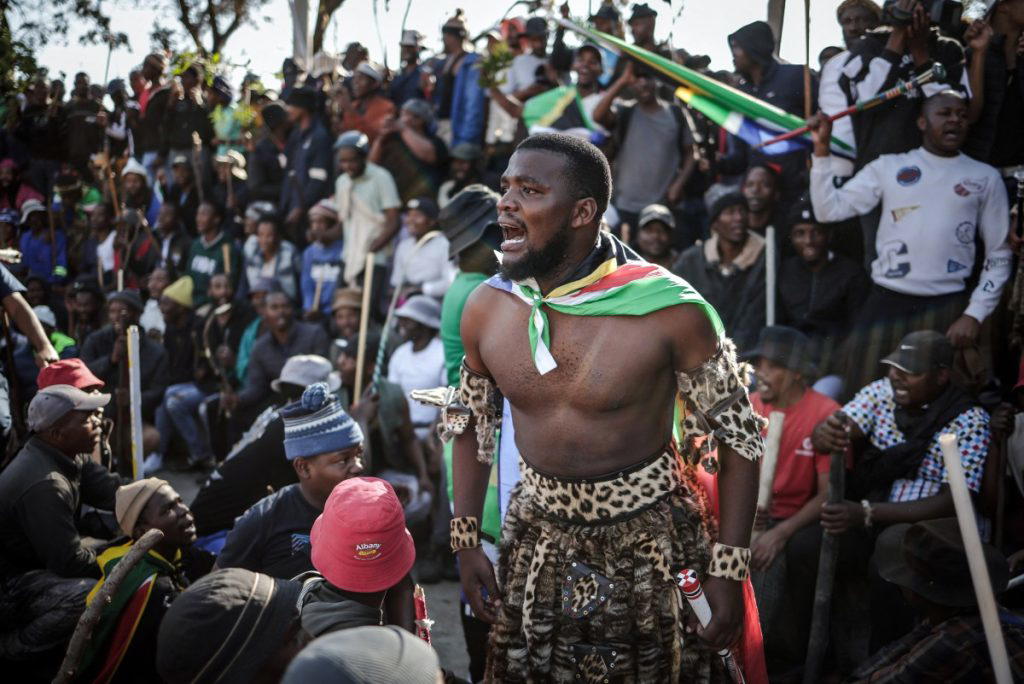
A young boy looks on as members of the Zulu regiment known as the Amabutho chant slogans while marching during a demonstration by the “March and March” movement marking an unofficial deadline set by citizen-led groups for undocumented foreign nationals to leave South Africa, in Durban, on June 30, 2026. Thousands of demonstrators massed across South African cities on June 30, 2026, venting anger at undocumented foreign nationals as police mounted a major operation to head off looting and xenophobic violence that has claimed four lives.
The nationwide protests cap weeks of demonstrations called by a loose coalition of minor political parties and small citizen-led vigilante groups, which set an unofficial June 30 deadline for foreigners without residency papers to leave. (Photo by MARCO LONGARI / AFP)
Thousands of people marched Tuesday in cities across South Africa to demand the departure of undocumented foreign nationals after a weeks-long campaign that has sent thousands fleeing and claimed four lives.
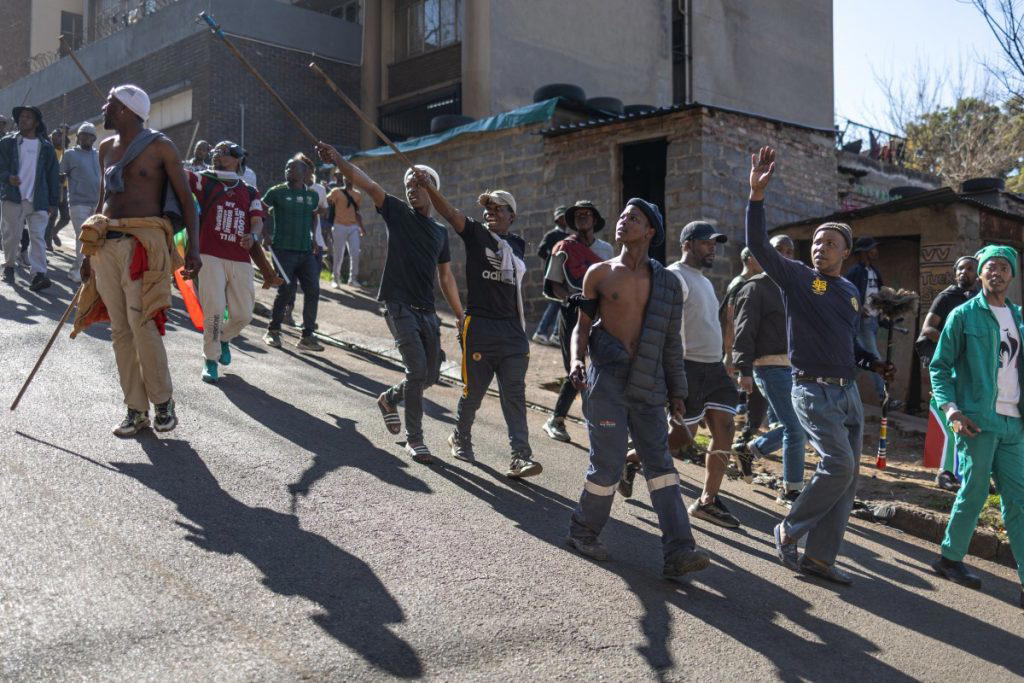
The nationwide protests cap weeks of demonstrations called by a loose coalition of minor political parties and small citizen-led vigilante groups, which set an unofficial June 30 deadline for foreigners without residency papers to leave. (Photo by EMMANUEL CROSET / AFP)
Police were out in force for the nationwide protests which capped a campaign of demonstrations led by citizen-led vigilante groups that set an unofficial June 30 deadline for foreigners without papers to leave.
There were isolated reports of looting, stone-throwing and confrontation, including near Johannesburg where security forces escorted a handful of foreign nationals away from a mob brandishing large sticks.
Crowds of demonstrators moved through the centre of the city, South Africa’s financial capital, where most shops were shuttered, workers stayed home, and transport hubs were quiet.
Officers were out in force to prevent violence and looting by the xenophobic groups, while hundreds of foreign nationals took refuge in several cities, urgently seeking help to leave. (Photo by EMMANUEL CROSET / AFP)
They waved flags and placards, watched by police in bulletproof jackets and riot helmets.
In the southeastern city of Durban, the Zulu heartland, protesters turned out in traditional warrior attire, carrying spears, whips and shields and some draped in leopard skins.
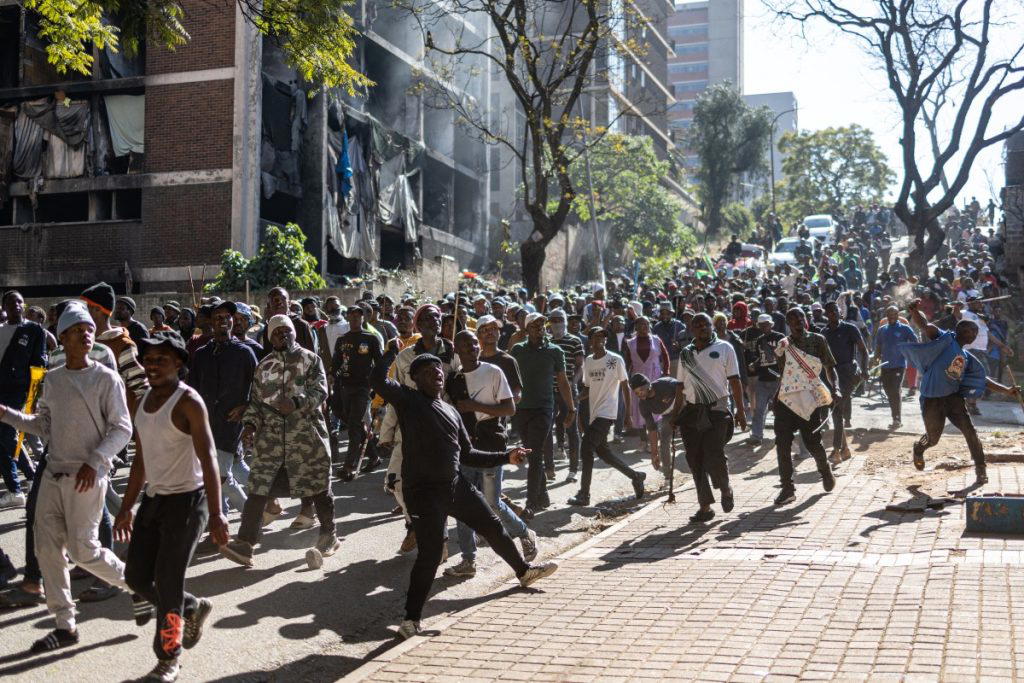
The nationwide protests cap weeks of demonstrations called by a loose coalition of minor political parties and small citizen-led vigilante groups, which set an unofficial June 30 deadline for foreigners without residency papers to leave. (Photo by EMMANUEL CROSET / AFP)
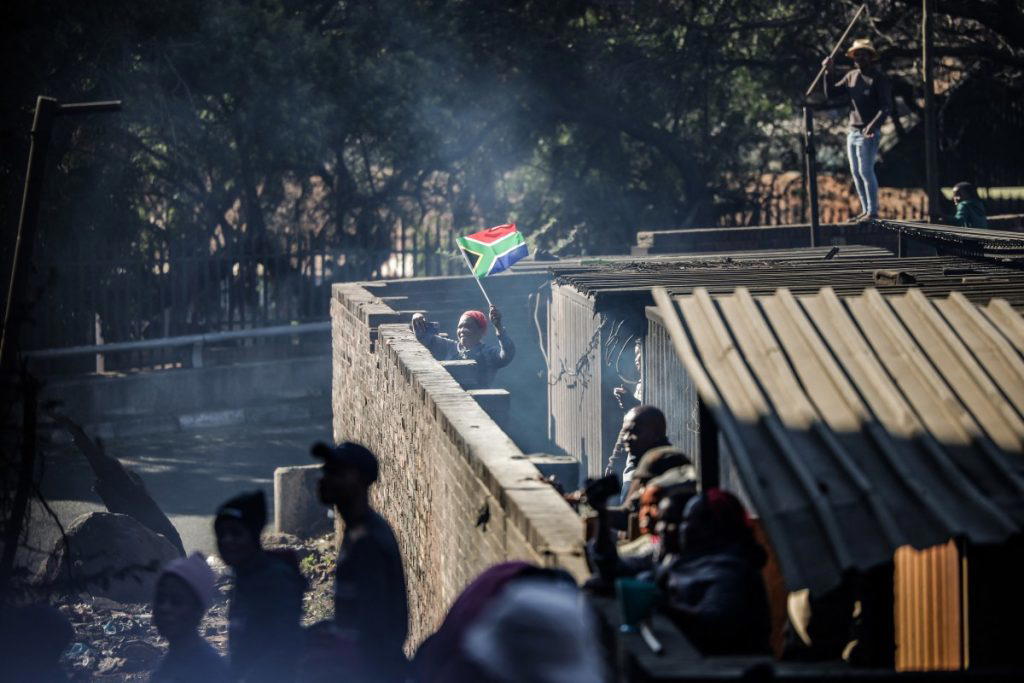
The nationwide protests cap weeks of demonstrations called by a loose coalition of minor political parties and small citizen-led vigilante groups, which set an unofficial June 30 deadline for foreigners without residency papers to leave. (Photo by EMMANUEL CROSET / AFP)
Demonstrator Brightness Gumbi, 48, said she was frustrated at not being able to afford to rent a premises for her business while foreign nationals were able to run shops.
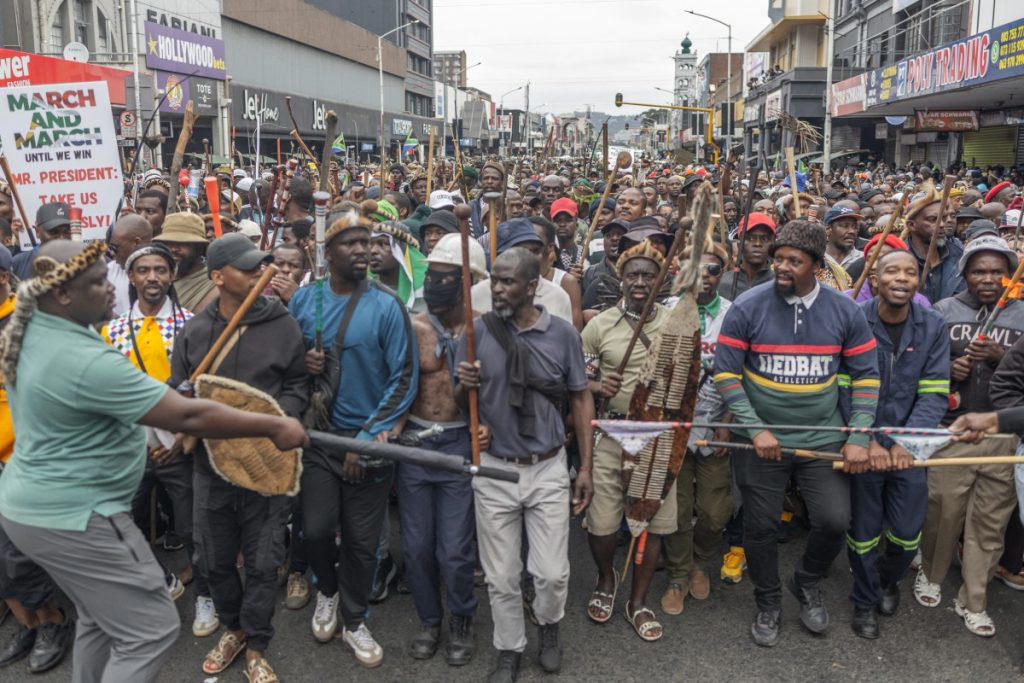
The nationwide protests cap weeks of demonstrations called by a loose coalition of minor political parties and small citizen-led vigilante groups, which set an unofficial June 30 deadline for foreigners without residency papers to leave. (Photo by RAJESH JANTILAL / AFP)
“The illegal foreigners manage to pay it because they sell drugs to our people,” she told AFP. “I hope through these demonstrations our president will hear our cries and enforce stricter laws.”
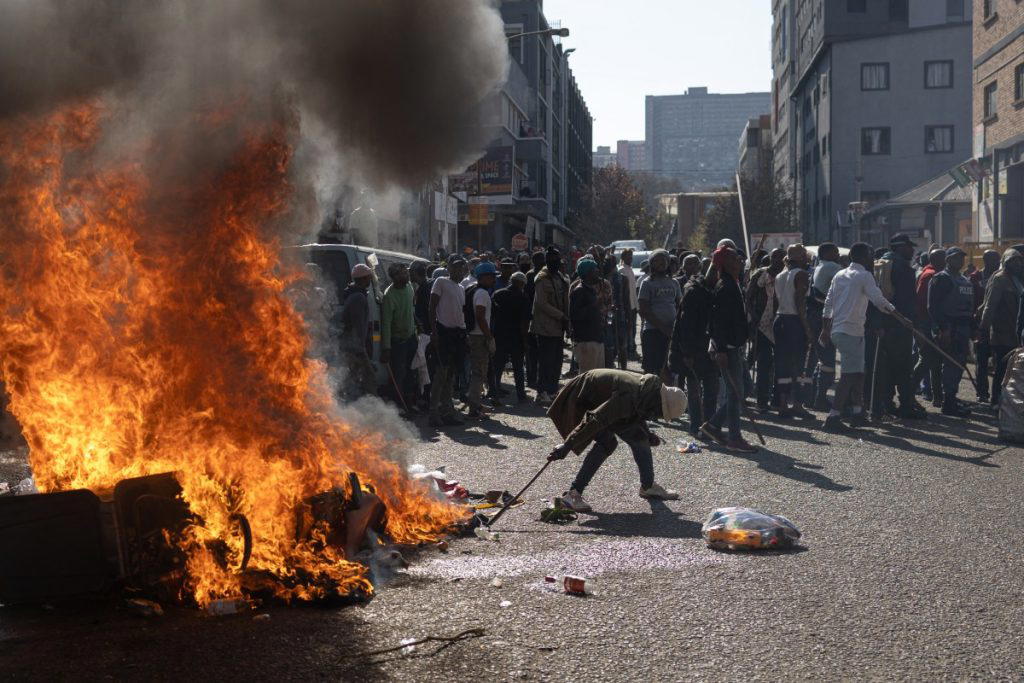
The nationwide protests cap weeks of demonstrations called by a loose coalition of minor political parties and small citizen-led vigilante groups, which set an unofficial June 30 deadline for foreigners without residency papers to leave. (Photo by EMMANUEL CROSET / AFP)
In tourist magnet Cape Town, only about 100 people joined a march through the city centre, passing a counterprotest against Afrophobia and xenophobia.
– ‘Mass deportation’-
One of the continent’s wealthiest countries, South Africa is a magnet for migrant labour while grappling with an unemployment rate above 30 percent, high crime and a breakdown in services in many areas.
Groups mobilising against illegal immigrants say they take jobs and services from locals, claims that analysts say is unfairly scapegoating foreign nationals for government failures.
“South Africans have been replaced by illegal foreigners, increasing unemployment,” the leader of the anti-immigrant March and March group, Jacinta Ngobese-Zuma, told a crowd in Durban.
“We want mass deportation,” she said. “For the next six months we want the government to get rid of the people who have not left.”
At least two Mozambicans, an Ethiopian and a Malawian have been killed in the latest outburst of anti-immigrant violence, according to police.
Several African governments — including Nigeria, Malawi, Ghana, Zimbabwe and Mozambique — have organised voluntary repatriation flights and buses for their citizens.
South Africa has seen previous flare-up of violence targeting undocumented foreign nationals, but this is the first time governments have simultaneously organised repatriations.
More than 25,000 people had been processed for departure in recent weeks, authorities said Monday.
– ‘I’m scared’ –
As the protests unfolded in several cities, hundreds of migrants — mostly Malawians and Zimbabweans — gathered in Cape Town, Johannesburg and other centres, waiting for assistance to go home.
Some said their landlords had evicted them or their employers had fired them, fearing fines from officials or attacks by vigilante groups.
“The people in South Africa, they don’t want us here. I’m scared,” said a 23-year-old Zimbabwean woman, who asked to remain anonymous, where around 2,000 people were waiting for buses.
Only a few dozen Malawians remained at a site in Durban from where several thousand had been bused out in recent days, either taken back to their country or to a processing site near the border with Zimbabwe.
“I thought I could stay on but neighbours warned us last night,” 32-year-old Adam John told AFP. “I felt that it is better to try and get home while I still can.”
– ‘Weaponised’ –
Concerned about a repeat of unrest five years ago when around 350 people were killed in days of looting and riots, the government put in place a massive security deployment for Tuesday’s mobilisation.
President Cyril Ramaphosa announced stepped-up government plans to combat illegal immigration and called on traditional leaders to use their “standing to calm tensions”.
Coming ahead of local government elections in November, the anti-migrant push has been “politically weaponised”, labour analyst Dale McKinley said.
Previous anti-foreigner riots in South Africa have proved deadly. In 2008, violence left 62 people dead.