







Can Africa itself correct the bias it says the Big Three credit rating agencies display in grading African sovereigns? The African Union (AU) and other voices on the continent believe this bias gives African countries unfairly low ratings, pushes up their borrowing costs and slows development.
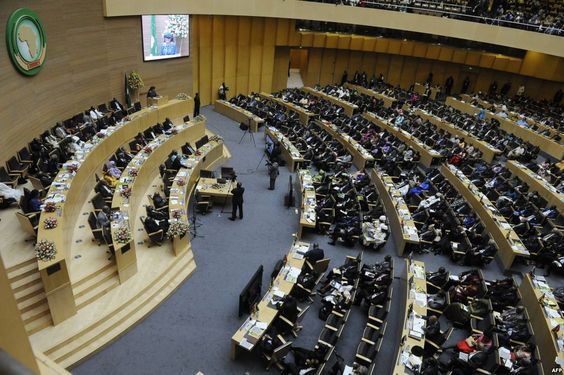
So in February 2025, the AU announced the creation of its own Africa Credit Rating Agency (AfCRA), headquartered in Mauritius. “Africa is no longer content to be a passive observer in this discourse,” AU African Peer Review Mechanism Chief Executive Officer (CEO) Marie-Antoinette Rose-Quatre said last September. “We are taking ownership of our narrative and driving forward meaningful, homegrown solutions.”
Certainly, African sovereigns on average receive lower ratings from the Big Three – Standard and Poor’s (S&P), Moody’s and Fitch, all private American companies – than developed countries do.
In 2025, only Botswana, Morocco and Mauritius had investment-grade status, while South Africa, Côte d’Ivoire and Benin were rated just below investment grade. The remaining 49 were rated well below. Several African countries are not rated at all, remaining excluded from capital market access.
However, to say the Big Three have generally rated African sovereigns lower than developed countries is not necessarily proof of bias. The three companies insist they grade all states according to the same criteria and that African countries happen to score lower.

The Big Three publish these criteria, which are roughly the same. They include economic, institutional and governance strength, the strength of civil society and the judiciary, and the effectiveness of monetary and macroeconomic policy.
An April report by the Konrad-Adenauer-Stiftung (KAS) and the Leibniz Institute for Economic Research noted that while some of the measures – like gross domestic product (GDP) and debt ratios – are objective, others, like institutional and governance strength, are more subjective. Together with the weighting credit rating agencies give to the various criteria, this would allow for bias.
The report found that even some of the objective indices were inherently unfavourable to African countries. For example, the Big Three’s emphasis on GDP per capita as a measure of economic strength effectively meant poorer countries were punished for being poor and were not offered an incentive to escape poverty.
The report noted a diversity of per-capita incomes globally. In 2023, these ranged from $511 in the Democratic Republic of the Congo (DRC) to $98,700 in Ireland at the upper end. In this model, the authors said, most African countries “would need to raise their per-capita income to the level of Mauritius [US$10 552] … to achieve a one-notch improvement in their rating (all other factors held constant).”
Similarly, a 2025 United Nations Trade and Development report revealed that the Big Three placed greater emphasis on developing countries holding adequate reserves than they did for developed countries. That forced developing countries to invest more in conservative, low-yielding assets, constraining their ability to invest at higher returns.
The KAS-Leibniz report applied a complicated mathematical formula and concluded that there was a bias. This resulted in the Big Three underrating African governments by an average of 0.5 to 1 notches or rungs. Not huge, but significant.
Last month, a Chatham House and KAS seminar asked how an African credit rating agency might improve the continent’s financing conditions. Moody’s Marie Diron implicitly denied any ratings bias by her company.
She said Moody’s had studied 40 years of debt defaults worldwide, and that ‘If our ratings were biased, you would expect to see, for a given rating level, that the probability of default for an African sovereign is lower than for a sovereign elsewhere in the world.’ Moody’s found a ‘perfect alignment’ between African sovereigns and others, she said.
The bigger question is: regardless of whether there is bias in the Big Three’s ratings of African countries, could an African credit rating agency resolve this problem?
Chatham House Senior Research Fellow David Lubin said portfolio managers and others allocating capital used credit ratings to help them decide whether to invest in, say, the DRC or the Philippines. The AfCRA seemed to help them only decide among different investment prospects in Africa.
He asked whether AfCRA was not essentially Africa ‘marking its own homework’? Why would pension fund managers, company CEOs and others believe an African credit rating agency would rate African sovereigns objectively?
Development Reimagined CEO Hannah Wanjie Ryder, however, said credit rating agencies should consider other criteria – including the extraordinary efforts African governments go to, to avoid debt defaults. She said an AfCRA would also have a better understanding than outside agencies of the peculiarities of African economies, such as the importance of the informal sector.
But precedents for the success of a new, regional credit rating agency are not encouraging. In 2012, the KAS-Leibniz report notes, the European company Scope began issuing credit ratings in Europe to provide a Europe-based alternative to the Big Three.
The three companies were ‘perceived as biased against Europe and insufficiently attuned to European specifics.’ In other words, similar motivations as for AfCRA’s creation. Yet the KAS-Leibniz report notes that Scope’s global market share remains below 1 per cent, “and it … has not yet succeeded in lowering the credit cost of European issuers.”
As the AU, KAS-Leibniz report and Chatham House discussion all agreed, for the AfCRA to have any hope of success, it must be scrupulously independent and transparent. It needs to operate as a purely private company with no hint of AU or African government funding, and must issue credit ratings that bear full external scrutiny.
And even if it doesn’t improve financial conditions for African countries through its credit ratings, it could still do so by helping African governments and other entities improve their prospects of achieving higher credit ratings – including from the Big Three.
That could be done by ensuring the Big Three better understand the circumstances of African countries and are more open and independent in their ratings of African credit risk, which already seems to be happening.
Peter Fabricius, Consultant, ISS Pretoria
(This article was first published by ISS Today, a Premium Times syndication partner. We have their permission to republish).