





![Trump declares US most powerful country on earth [VIDEO]](https://gazettenaija.blog/wp-content/uploads/2026/06/Trump-3-150x150.jpg)




A close friend recently returned to Nigeria for the first time after fifteen years in the United Kingdom. Like many Nigerians in the diaspora, he had spent those years toiling, saving, and painstakingly constructing his dream home back in the homeland. Having finally completed the project, he decided it was time to return and add the finishing touches to the life he had imagined from afar.
One of his immediate priorities was furnishing the house. Naturally, he assumed he would patronise the same furniture stores that had dominated the city when he left. Those establishments were more than businesses. They were institutions, household names woven into the commercial fabric of the city.
To his utter astonishment, most of them had vanished.
One after another, the familiar names had either shut their doors or faded into obscurity. In their place stood an entirely different retail ecosystem. He was first directed to Spar, a supermarket chain that now offers everything from groceries to household goods. But even that, he was informed, was no longer the preferred destination for many consumers.

He was then introduced to Jiji, Nigeria’s thriving ecommerce platform, often described as the country’s version of Amazon. From the comfort of his living room, he could browse hundreds of furniture options, compare prices, negotiate directly with vendors, and arrange doorstep delivery with a few taps on his phone. He was amazed.
The Enugu he had left fifteen years earlier had quietly reinvented itself. The bustling furniture stores and household shops that once defined the city’s commercial landscape had given way to supermarkets, digital marketplaces, and an entirely new way of conducting business. Consumers no longer needed to spend an entire day navigating Ogbete Main Market or driving from one store to another in search of household items. Technology had fundamentally altered consumer habits, expectations, and patterns of commerce.
Even the famed Igbo apprenticeship system has not been immune to this transformation. The traditional arrangement in which young men left primary or secondary school to serve a master for several years before being settled into business has undergone profound changes. In many sectors, the era of Umu Boyi is steadily giving way to salaried employees, commissioned sales representatives, and digitally enabled enterprises. The landscape has changed irrevocably.
As I reflected on my friend’s experience, my thoughts drifted to the wealthy post-civil-war Igbo families, the Ekenedilichukwus and the Nkwuochas, who built formidable empires in transportation and construction and whose businesses once appeared indestructible. Many of those empires have disappeared into history, leaving behind neither enduring institutions nor generational wealth capable of outliving their founders. Therein lies one of the most profound lessons of our age: the world never stands still.
Industries evolve. Technologies emerge. Consumer preferences shift. Entire economic ecosystems are dismantled and rebuilt with astonishing speed. Those who fail to adapt eventually awaken to the sobering reality that the world they once knew has disappeared and another has taken its place.
Only a few years ago, the suggestion that millions of people would replace powerful search engines with AI-powered conversations would have sounded preposterous. Yet that is precisely where we find ourselves today.
Google, the company that virtually defined the internet for more than two decades, suddenly found itself in an unexpected contest for relevance following the emergence of ChatGPT and other generative artificial intelligence platforms. The disruption has been both swift and profound.
Students increasingly rely on artificial intelligence to explain difficult concepts. Lawyers employ it to draft legal documents. Doctors use it to synthesise research and assist with clinical decision-making. Programmers deploy it to write code. Businesses utilise it to create marketing campaigns and enhance customer service.
A mere two decades ago, few could have imagined that one of the world’s largest transportation companies would own no vehicles or that one of the world’s most valuable hospitality companies would possess no hotels. Yet Uber and Airbnb have fundamentally rewritten the rules of their respective industries.
Netflix transformed entertainment and rendered Blockbuster obsolete. Amazon revolutionised retail and sent many big-box retailers parking. Digital banking is steadily diminishing the significance of brick-and-mortar branches. Automation and robotics are redefining the future of work. The casualties of technological disruption are everywhere.
Blockbuster ignored streaming and perished. Kodak invented the digital camera but failed to embrace it because it feared cannibalising its lucrative film business. The company that once dominated global photography ultimately succumbed to bankruptcy. BlackBerry dismissed the touchscreen smartphone as a passing fad and paid dearly for its miscalculation. The lesson is brutally simple. Yesterday’s success guarantees nothing in tomorrow’s world.
We are living through yet another technological revolution, one that may prove even more transformative than the internet itself. Unlike previous innovations that disrupted only a handful of industries, artificial intelligence is simultaneously reshaping virtually every sphere of human endeavour. Medicine, education, finance, manufacturing, transportation, law, entertainment, and journalism are all being reconfigured before our very eyes. The implications are immense.
In medicine, artificial intelligence is already helping detect breast cancer, diabetic retinopathy, and cardiovascular disease with astonishing precision. Sophisticated algorithms can identify abnormalities that occasionally elude even the most experienced human eye and can predict clinical deterioration before patients become critically ill. The question, therefore, is no longer whether artificial intelligence will transform medicine. It already has.
The more pertinent question is whether a doctor like me is willing to adapt to a reality in which artificial intelligence becomes an indispensable partner in patient care. The same challenge confronts every profession.
Lawyers who refuse to understand artificial intelligence will compete against those who do. Teachers who embrace technology will outperform those who resist it. Businesses that fail to integrate digital tools will struggle against competitors that do. Entire nations face the same existential challenge.
Countries that invest in innovation, education, and digital infrastructure will shape the future. Those that remain imprisoned by outdated assumptions and obsolete systems risk being consigned to the margins of history.
The challenge before us is not primarily technological. It is psychological.
Human beings are creatures of habit. We become comfortable with familiar ways of doing things and often mistake today’s reality for tomorrow’s certainty. But certainty is an illusion. The only constant in life is change.
My friend eventually furnished his home. Most of the items were purchased online through platforms that did not even exist when he left Nigeria fifteen years earlier. He could not stop marvelling at how much had changed. His experience served as a poignant reminder that the world waits for no one. Technology does not pause for the comfortable. Progress has no reverse gear.
Lately, I have found myself trying to understand the concept of distributed ledgers and learning about a mysterious figure named Satoshi Nakamoto. The reason has nothing to do with holding a position in the cryptocurrency world but rather with the new reality that my ability to practise medicine may one day depend on understanding these technologies.
I am trying to envision the future, much like the health startups experimenting with the application of blockchain technology. For, in the end, Charles Darwin cautioned, “It is not the strongest of the species that survive, nor the most intelligent, but the ones most responsive to change.”
That may well be the defining lesson of our age. In life as in business, and even in nations, there are ultimately only two choices. Adapt or perish.
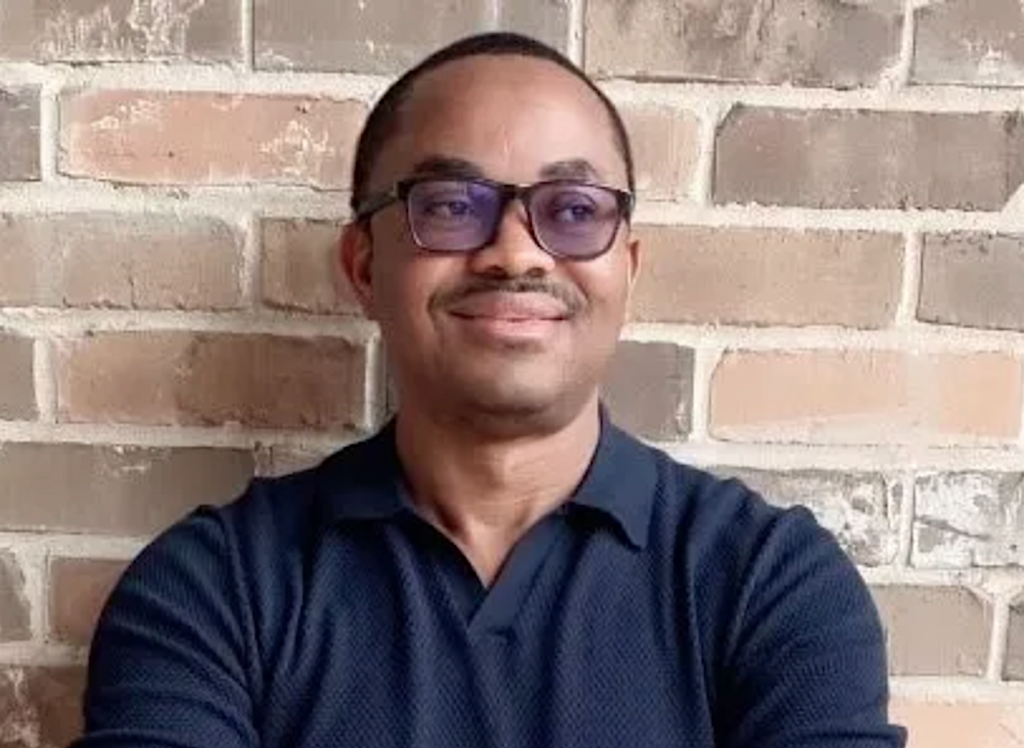
Osmund Agbo is a medical doctor and author. His works include Black Grit, White Knuckles: The Philosophy of Black Renaissance and the novel The Velvet Court: Courtesan Chronicles. His most recent publications, Pray, Let the Shaman Die and Ma’am, I Do Not Come to You for Love, have just been released.