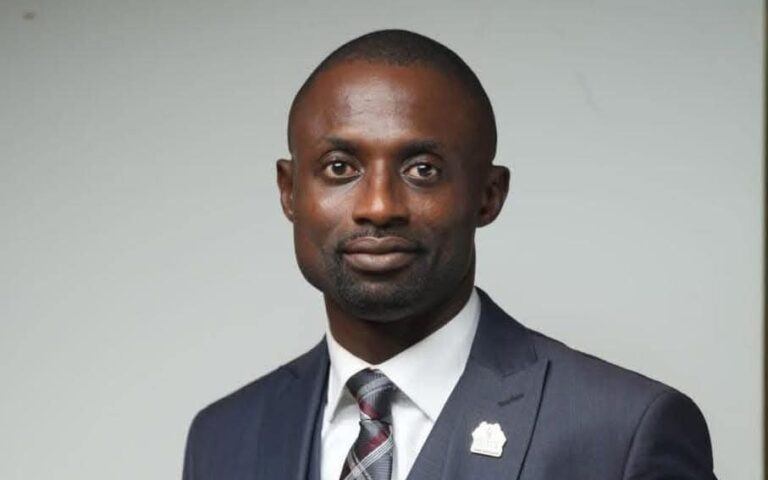








Secretary of War Pete Hegseth has selected a new team to help shape policy for the Pentagon.
The Department of War’s (DOW) new Defense Policy Board roster will be composed of former government officials, Silicon Valley investors, nuclear deterrence specialists, former lawmakers, economic security officials and conservative policy figures. Hegseth is adding the fresh appointees to the board as the Trump administration aims to reform the Pentagon and pivot towards the artificial intelligence (AI) arms race with China.
The DOW board will be chaired by Robert Lighthizer, who was President Donald Trump’s U.S. trade representative during his first term, from 2017 to 2021.
“Established in 1985, the Defense Policy Board is an advisory committee tasked with providing independent strategic advice and recommendations to the Secretary, the Deputy Secretary, and the Under Secretary for Policy,” according to a Monday DOW press release.
Hegseth also named former Republican Minnesota Sen. Norm Coleman as vice chair and appointed 13 other members to the board, according to Monday’s announcement.
Among the most recognizable members are Marc Andreessen, the co-founder of Netscape and venture capital firm Andreessen Horowitz; retired Adm. Chas Richard, the former commander of U.S. Strategic Command; Michael Pillsbury, a longtime China strategist; Blake Masters, a technology investor and former Arizona Republican Senate candidate and Mike Garcia, a former Republican congressman from California and Navy fighter pilot.
“Defense Policy Board members will meet with senior department officials, to include the Secretary, on a regular basis to share their distinguished perspectives and experiences from across the government and private sector,” a DOW official told the Daily Caller News Foundation. “We look forward to hearing their viewpoints on how the Department of War can effectively implement President Trump’s America First, Peace Through Strength agenda.”
The board does not have any power to command troops or conduct operations.
The other new members on the board are former Director of Policy Planning Michael Anton, Senior Director of Policy at the Conservative Partnership Institute Rachel Bovard, former Treasury Assistant Secretary Tom Feddo, Florida Board of Governors member Kenneth Jones, Heritage Foundation fellow Daniel McCarthy, Assistant United States Attorney for the Middle District of Pennsylvania Francis Sempa, previous chairman of the board Christopher Williams and former Assistant Attorney General Theo Wold, according to the department.
The White House referred to the DOW. Representatives for several board members and affiliated organizations did not respond to requests for comment. Bovard and McCarthy declined to comment.
China In Focus?
The board is stacked with China hawks, who have written and commented on the rising threat from Beijing as the U.S. rises to the challenge of an AI arms race with China.
Garcia, a former Republican congressman from California, is a vocal critic of Beijing. Garcia led the charge on H.R. 7686, a bill that updated the definition of “malign foreign talent recruitment programs.”
“The CHIPS Act is only as strong as its defenses against foreign exploitation,” Rep. Garcia said in a Sept. 9, 2024, House Science Committee press release. “This bill eliminates confusing language in the CHIPS Act that could have allowed China to rob, replicate, and replace our innovations with their own.”
“China is not our friend,” Garcia said in an opening statement before the House Committee on Science, Space and Technology on May 12, 2022. “The Chinese Communist Party is actively attempting to supplant the United States as the driving force in Science and Technology research.”
Retired Adm. Richard, who previously served as commander of U.S. Strategic Command, gives the board one of its clearest military voices. Richard has warned in the past that the U.S. is no longer facing only Russia, but also China and other growing powers in a multipolar order.
“We are witnessing a strategic breakout by China,” the Department of War reported on Aug. 12, 2021, citing Richard. “The explosive growth and modernization of its nuclear and conventional forces can only be what I describe as breathtaking. And frankly, that word breathtaking may not be enough.”
“As I assess our level of deterrence against China, the ship is slowly sinking,” the Department of War reported on Nov. 3, 2022, citing Richard. “It is sinking slowly, but it is sinking, as fundamentally they are putting capability in the field faster than we are. As those curves keep going, it isn’t going to matter how good our [operating plan] is or how good our commanders are, or how good our forces are — we’re not going to have enough of them. And that is a very near-term problem.”
The board has a direct line into Silicon Valley through Andreessen at a time when AI, autonomous systems and defense technology are increasingly central to military planning. Andreessen co-founded Netscape and later co-founded Andreessen Horowitz, a venture capital firm that has pushed deeper into defense, aerospace, manufacturing, public safety and other industries tied to national defense.
Longtime China strategist Pillsbury adds another China-focused voice to the board. Pillsbury is best known for “The Hundred-Year Marathon,” a book arguing that Beijing is pursuing a long-term strategy to displace the United States as the world’s leading power.
Masters brings a link to the technology wing of the conservative movement. He is currently a board member of the tech-focused Thiel Foundation.
Masters co-wrote “Zero to One” with billionaire tech investor Peter Thiel, and previously served as chief operating officer of Thiel Capital.
“China is the biggest geopolitical rival,” Masters told The Spectator in an interview on July 19, 2021. “I think we’ve been asleep at the wheel on China for decades. I think they take a long-term view. They’re deadly serious, a fundamentally incompatible civilization, and we’ve let them have the keys, so that’s going to be a real issue for us.”
Bovard is a senior conservative policy figure who spent years in conservative Capitol Hill policy circles, including work for Sen. Rand Paul and the Senate Steering Committee. She advocates against Big Tech and China.
“On Big Tech, Republicans will need to come out swinging,” Bovard wrote in an article on The Federalist.
“American data is being put at risk by American companies’ willingness to grovel to China,” Bovard wrote in a 2019 op-ed for the Daily Caller News Foundation. “While American tech companies have been eagerly seeking to please China over the last two decades, China has been busy trying to copy and steal American technology.”
The economic security and foreign investment angle is covered by Feddo. He served as the first assistant Treasury secretary for investment security, leading the Committee on Foreign Investment in the United States, which reviews foreign transactions for national security risks.
Feddo has pointed out that China’s expansive investments throughout America could be allowing Chinese influence in the U.S. economy.
“One well-covered story over the last several years was a marked uptick in foreign investment from China,” the Treasury reported on July 15, 2020, citing Feddo. “We know that foreign investment isn’t always benign.”
Former Trump administration legal policy official Wold will add more representation from the conservative policy world. Wold served in the Trump administration and has focused more recently on technology, the administrative state and big tech issues.
Child safety is one of Wold’s main focuses. He has advocated for the management of social media platforms that could show teenagers and kids harmful content.
Wold has said in the past that Americans should support U.S.-made goods over those produced by Beijing.
“Buy American. Your dollars should support your countrymen, not the CCP,” Wold wrote on the Daily Caller on June 4.
“The Defense Policy Board should remain focused on the challenges that matter most to America’s long-term security,” Bob Peters, acting director of the Douglas and Sarah Allison Center for National Security at the Heritage Foundation, told the DCNF. “Meeting our future security needs requires rebuilding America’s defense industrial base and ensuring our servicemembers have the ships, precision munitions, and military capabilities they need to deter conflict and, if deterrence fails, decisively defeat future adversarial aggression.”
‘Urgent Threat’
Lighthizer’s appointment suggests the department could place added emphasis on the connection between defense policy, industrial capacity, trade policy and the industrial competition with Beijing.
Lighthizer has been openly critical of the economic ties the U.S. has to China in the past and has suggested a decoupling of the two nations’ economies.
“Congress should enact policies that strategically decouple the United States economy from the Chinese economy,” Lighthizer said at the House Select Committee on Strategic Competition between the United States and the Chinese Communist Party on May 17, 2023. “In parallel, it should take steps to reinvigorate the health of the American industrial base to support American workers and ensure that America is prepared to combat Chinese military and economic coercion.”
“Communist China is the most urgent threat to U.S. national security, and our defense policies should reflect that reality,” Peters told the DCNF.
The Defense Policy Board’s recommendations can help shape the thinking of top Pentagon officials on long-term strategic questions.
“It [the Defense Policy Board] focuses on matters pertaining to strategic planning, the policy implications of U.S. force structure and modernization, regional defense policies, and other defense policy and national security issues of special interest to the Department,” according to the Monday DOW press release.
The appointment of Coleman as the board’s vice chair reinforces Trump’s current stance on Iran. Coleman has advocated for the denuclearization of Iran since as early as 2006 and has even called for regime change.
“It is clear that Iran cannot be allowed to develop nuclear weapons, that is, that’s the bottom line,” Coleman said during a Senate Foreign Relations Committee meeting on May 17, 2006. “Regime changes in the best interest of this country [Iran]. This is a regime in which you’ve got a president openly talking about the destruction of Israel.”
Hegseth appointed these new members during a critical moment for the U.S. military and foreign policy as conflicts rage throughout the world.
The Iran War has also been increasingly active in recent weeks, as a Memorandum of Understanding was signed that enacted a ceasefire, but hostilities quickly resumed after Trump claimed Iran violated the ceasefire.
The Russo-Ukrainian conflict has also seen a recent escalation as the Ukrainians have begun to strike Moscow, and the Russian Ministry of Defense has threatened to attack targets in Western Europe.
China has been increasingly confrontational with Taiwan over the last few months. China has repeatedly sent aircraft and ships into the waters and skies that surround Taiwan.
Notably, China ramped up its aerial and naval incursions during a key tech conference in Taiwan several times in one week in June.
“China to me is an existential threat to the United States,” Lighthizer said during an interview on “60 Minutes” on Feb. 2, 2025. “It is– a very, very competent adversary.”