






For decades, African teams have arrived at the FIFA World Cup with enormous expectations, only to leave wondering what might have been. There have been unforgettable moments, giant-killing performances and inspiring individual displays, but rarely has the continent produced the collective consistency needed to challenge football’s traditional powerhouses.
At the 2026 FIFA World Cup, that narrative changed dramatically.
The expanded 48-team tournament presented Africa with its biggest-ever opportunity on the global stage, and the continent embraced it emphatically. Nine of Africa’s 10 representatives progressed beyond the group stage, marking the greatest collective performance by African nations in World Cup history.
From Morocco’s composed brilliance to Cape Verde’s dream debut, South Africa’s historic breakthrough, Egypt’s long-awaited World Cup victory and DR Congo’s emotional return to relevance, Africa emerged from the group stage not as underdogs, but as unexpected contenders.

Morocco continue to set Africa’s standard
If any African nation entered the tournament with genuine expectations, it was Morocco.

After rewriting history by becoming Africa’s first World Cup semi-finalists in Qatar four years ago, the Atlas Lions showed their remarkable run was no fluke with a group-stage performance that reflected how far they have come as a team.
Mohamed Ouahbi’s side opened with an impressive 1-1 draw against five-time champions Brazil, before grinding out a disciplined 1-0 victory over Scotland.
Surprisingly, their toughest examination came against Haiti, as Morocco found themselves trailing twice against an inspired Caribbean side before showing the mentality that has become synonymous with this generation.
Goals from Achraf Hakimi, Ismael Saibari, Soufiane Rahimi and Yassine Jassim completed an entertaining 4-2 comeback victory that secured seven points from three matches.
Although Brazil edged them to top spot on goal difference, Morocco’s unbeaten campaign reinforced why they are now widely regarded as Africa’s benchmark on the biggest stage.

Cape Verde capture the world’s imagination
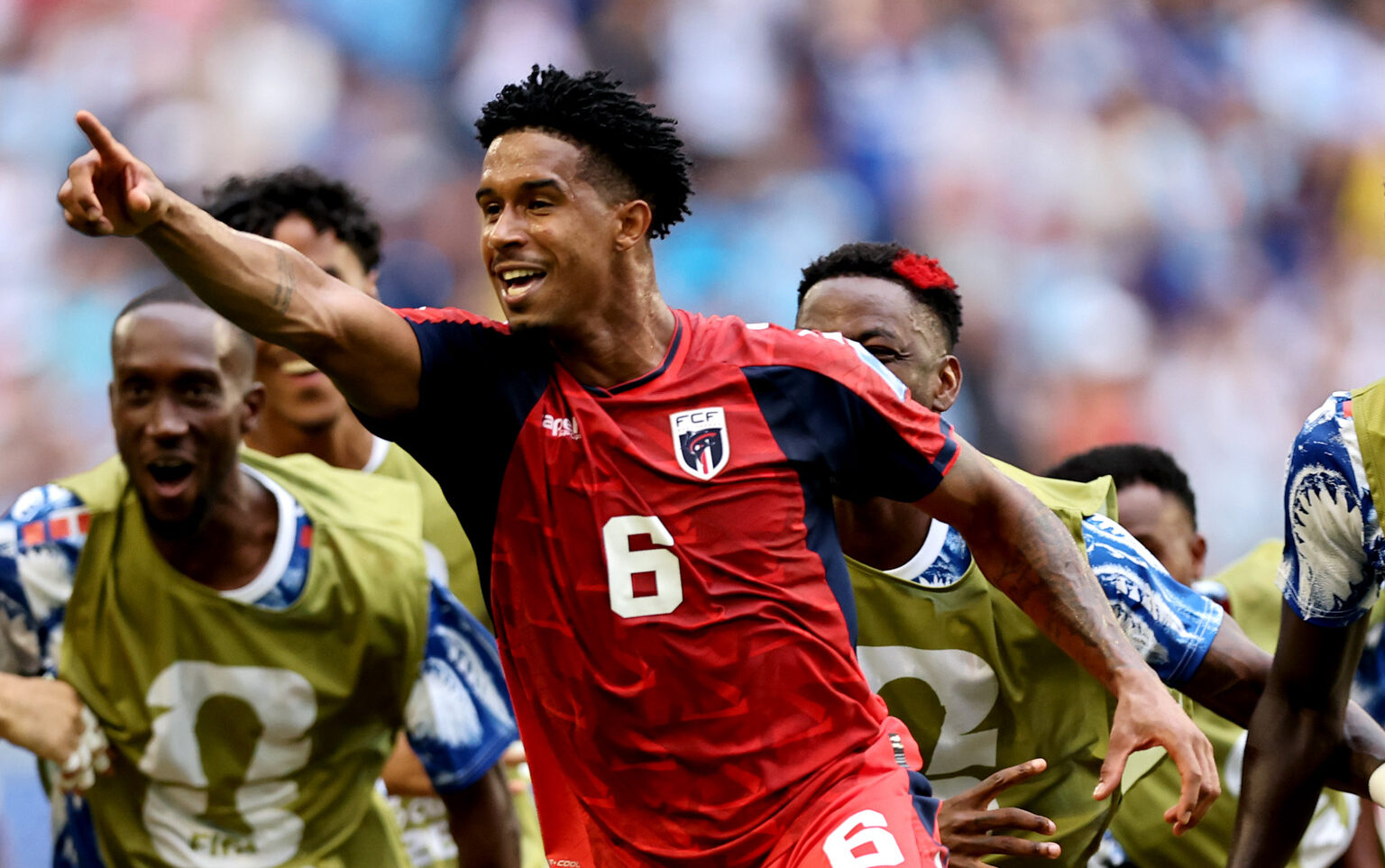
No African team produced a more captivating story than Cape Verde. Making their World Cup debut, the tiny island nation refused to be intimidated by football’s elite.
They opened with a remarkable goalless draw against Spain before earning another unforgettable result by fighting back twice to hold two-time world champions Uruguay to an exhilarating 2-2 draw.
The emotional scenes after that game perfectly captured what the tournament has meant to Cape Verde so far.
Goalkeeper Vozinha’s mother, Ana Candida Evora, had travelled outside Cape Verde for the first time in her life to watch her son play.
“I didn’t even have a passport,” she revealed after witnessing another historic night.
“I am proud of Cabo Verde.”
The Blue Sharks completed their fairy-tale group campaign with another battling draw against Saudi Arabia, finishing unbeaten and advancing to the Round of 32, sending the powerhouse Uruguay back home as well.
For a nation of barely half a million people, it ranks among the greatest achievements in African football history.
South Africa finally break their World Cup barrier
No African nation carried greater emotional baggage into the tournament than South Africa.
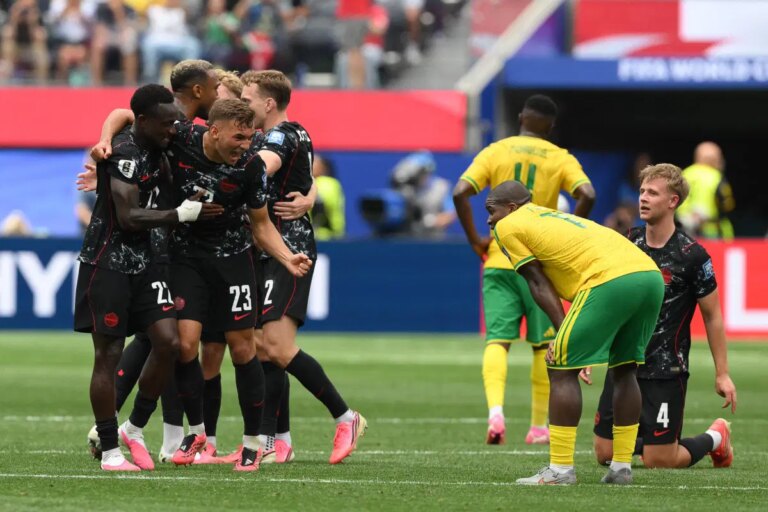
Bafana Bafana had never progressed beyond the group stage despite previous appearances, and their campaign appeared destined for disappointment after a 2-0 defeat to hosts Mexico.
Instead, Hugo Broos’ men responded magnificently; a disciplined draw against the Czech Republic restored belief, before Thapelo Maseko’s winner against South Korea delivered the most important victory in South African World Cup history.
The celebrations reflected years of frustration finally giving way to joy, as coach Hugo Broos later revealed that the unique relationship he shares with his players has become the foundation of the team’s success.
“I’m not just their coach,” he said.
“I think I’m their friend.”
That unity has transformed South Africa into one of the tournament’s surprise packages.

Egypt finally earn the victory they waited 92 years for
Few moments resonated more deeply across Africa than Egypt’s historic victory over New Zealand.
The Pharaohs had competed at previous World Cups dating back to 1934 but had never managed to win a match.
That painful statistic finally disappeared after opening with a hard-earned draw against Belgium; Egypt produced a superb second-half display to defeat New Zealand 3-1.
Mohamed Salah inspired the comeback, assisting and scoring his 68th international goal to move within one strike of equalling Hossam Hassan’s all-time national scoring record.
The Liverpool star described the victory as one of the greatest moments in Egyptian football history. The Egyptians then secured qualification with another disciplined draw against Iran, reaching the knockout stage unbeaten and on the same 5 points as group leaders Belgium.
DR Congo announce their return
After decades away from football’s grandest stage, DR Congo reminded the world why they remain one of Africa’s traditional powers.
The Leopards held Portugal to an impressive 1-1 draw before suffering a narrow defeat against Colombia, and, with qualification hanging in the balance on the final day of the group stage, they produced one of the finest African performances of the tournament.
Coming from behind, DR Congo defeated Uzbekistan 3-1 to book a place in the knockout rounds for the first time in their history.
For a nation returning to the World Cup after more than half a century, the result was filled with symbolism and hope.
Ivory Coast show their growing maturity
Ivory Coast once again demonstrated why they are becoming one of the continent’s most complete teams.
A dramatic victory over Ecuador gave the Elephants the perfect start before a narrow defeat against Germany threatened to derail their progress.
Instead of collapsing, they responded professionally.
Victory over Curaçao secured qualification and underlined the maturity within Emerse Faé’s talented squad.
Ghana battle through
The Ghanaians’ campaign perfectly reflected the resilience that has long defined the Black Stars, which had been missing for a while but was brought to the fore during this campaign.
They began with an extra-time victory over Panama before frustrating England in a goalless draw that showcased their defensive discipline.
READ ALSO: Coach Hugo Broos hails unity behind South Africa’s World Cup surge
Although Croatia edged them in the final group game, Ghana had done enough to progress as one of the best third-placed teams.
It was not always spectacular, but it was effective, and that was ultimately needed.
Algeria refuse to surrender
Algeria looked destined for an early exit after suffering a heavy opening defeat to Argentina, as many expected the Desert Foxes to crumble.
Instead, they rediscovered their fighting spirit, as a comeback victory over Jordan revived their campaign before an entertaining 3-3 draw against Austria proved enough to secure qualification.
With Mahrez revisiting his prime with his displays so far, it was a reminder that experience remains invaluable at World Cups.
Disappointing Senegal survive the impossible
Few teams experienced greater emotional swings than Senegal, as defeats against France and Norway left the Teranga Lions staring at elimination.
Then came one of the greatest responses of the tournament, as Senegal demolished Iraq 5-0 in their final group game, recording the biggest World Cup victory ever achieved by an African nation.
The emphatic triumph carried them into the knockout rounds on goal difference and restored belief that this talented generation still has more to offer.
Tunisia’s painful exit
Tunisia were the only African side unable to keep pace with the continent’s extraordinary surge at the ongoing expanded 48-team FIFA World Cup format.
As heavy defeats to Sweden, Japan and the Netherlands exposed defensive frailties throughout the tournament.
Their disappointing campaign ultimately led to the dismissal of head coach Sabri Lamouchi before the competition had even ended, but it changed nothing, as the appointed coach during the tournament, an AFCON specialist, had no answers to the questions facing the team.
It was a painful reminder that while Africa has collectively advanced, maintaining standards remains crucial.
A defining moment for African football
For years, African football has spoken about potential, and at the 2026 FIFA World Cup, that potential finally translated into results.
Nine nations reached the knockout stage; historic firsts were achieved; long-standing records were broken; traditional powers were challenged; and, perhaps most importantly, African teams no longer appeared satisfied simply to compete.
Morocco spoke openly about winning the World Cup, South Africa chased history without fear, Cape Verde embraced the world’s biggest stage as equals, Egypt rediscovered belief, and Senegal refused to surrender.
The group stage was not merely Africa’s best-ever World Cup performance, it was a declaration that the continent has entered a new era.
The knockout rounds now offer the opportunity to turn an outstanding group-stage campaign into the greatest chapter African football has ever written.
At this rate, anything is possible!