










The emphasis placed on human capital within President Tinubu’s Renewed Hope Agenda reflects an understanding that economic transformation and social progress ultimately depend on the wellbeing, productivity and potential of the population itself. The challenge is to translate that understanding into tangible improvements in people’s lives and ensure that reforms, policies and investments deliver meaningful results for citizens across the country.
Nigeria’s development challenges are often discussed through the lens of economic growth, infrastructure, public finance, insecurity or unemployment. Each of these issues is important, yet beneath them lies a more fundamental question: whether we are investing sufficiently in the people who must sustain the nation, drive its economy and shape its future.
For many years, it has become customary to say that Nigeria’s greatest asset is its people. The statement is repeated so often that it risks becoming a cliché. Yet it remains profoundly true.
With a population exceeding 220 million and projected to grow substantially over the coming decades, Nigeria possesses one of the largest and youngest populations in the world. While many countries grapple with ageing populations and shrinking workforces, Nigeria’s challenge is not a shortage of people but whether we are making the investments necessary to enable them to live healthy, educated and productive lives.
A large population, by itself, does not create prosperity. It creates possibilities. Whether those possibilities translate into economic growth and social progress depends on the health, education, skills and capabilities of the population. The demographic dividend that transformed many societies did not emerge because their populations grew. It emerged because investments were made in people, allowing them to participate productively in economic and social life.

This is why human capital development deserves to occupy a central place in our national conversation.
At the heart of President Bola Ahmed Tinubu’s Renewed Hope Agenda is the recognition that sustainable growth, economic competitiveness and social progress are inseparable from the quality of a nation’s human capital. Countries prosper not simply because they possess natural resources, physical infrastructure or financial capital, but because they invest consistently in the capabilities of their people and create the conditions for those capabilities to flourish across generations.
The Demographic Opportunity
The demographic realities confronting Nigeria present both an opportunity and a warning. A youthful population can become either a powerful engine for growth and innovation or a source of instability, exclusion and deepening poverty. The difference lies in whether people are equipped to participate productively in economic and social life.
This is the essence of the demographic dividend. When a society succeeds in improving health outcomes, expanding educational opportunities, reducing preventable mortality and creating pathways to productive employment, its population structure begins to work in favour of economic growth. More people become economically productive relative to the number of dependants they support. Savings increase, investment expands and prosperity becomes more broadly shared.
The demographic dividend is therefore not automatic. It is earned through deliberate investments in people.
Grey Matter Infrastructure
When development is discussed, attention naturally gravitates towards physical infrastructure. Roads, bridges, airports, rail lines and public buildings remain important markers of progress because they improve connectivity, facilitate commerce and support economic activity. Yet history repeatedly demonstrates that physical infrastructure alone does not determine whether societies prosper.
The infrastructure that ultimately shapes long-term development is less visible. It is found in the health of mothers, the nutrition of children, the quality of schools, the skills of workers and the cognitive development of future generations. It is what I have described elsewhere as grey matter infrastructure.
Grey matter infrastructure begins long before a child enters a classroom. It starts with maternal health and nutrition, extends through early childhood development and foundational learning, and continues through schooling, skills acquisition and productive employment. It is built through deliberate investments that enable individuals to develop their capabilities throughout the life course.
Much of the brain’s foundational architecture is established during the first 1,000 days of life, making maternal health, nutrition and early childhood development among the most consequential investments any society can make.
The importance of these investments is not theoretical. A child’s cognitive development is shaped significantly during the earliest years of life. Poor nutrition, inadequate healthcare and limited stimulation during this period can have lasting consequences for learning, educational attainment and future earnings. Conversely, children who receive adequate nutrition, healthcare and educational support are more likely to succeed in school, participate productively in the economy and contribute positively to society.
The evidence linking these investments to economic growth is substantial and remarkably consistent across countries and over time. Healthier and better educated populations are more productive, earn higher incomes and create stronger foundations for future generations.
For this reason, investments in health and education should not be viewed merely as social expenditures. They are strategic national investments that influence economic growth, social stability, productivity, competitiveness and the future resilience of the state itself.
The Human Capital Challenge
Viewed from this perspective, Nigeria’s human capital challenge becomes difficult to ignore. The country continues to contend with high levels of maternal and child mortality, persistent malnutrition and significant gaps in educational attainment. Millions of children remain out of school, while many of those enrolled struggle to acquire basic literacy and numeracy skills. Learning poverty remains widespread. In many communities, children spend years in school without acquiring the foundational competencies necessary for future success.
These challenges are compounded by deep inequalities. National averages often conceal significant disparities in access to healthcare, education and economic opportunity. The consequence is not only poor outcomes but uneven opportunities that limit the ability of millions of Nigerians to realise their potential and contribute fully to national development.
It is important, however, that we resist the temptation to view these outcomes as inevitable. They are not. Human development outcomes reflect policy choices, institutional performance, public investment patterns and societal priorities accumulated over time. Budgets, after all, are more than financial documents. They are statements of priority. They reveal what governments and societies choose to value, what they choose to postpone and, ultimately, the future they are seeking to build.
There is also a compelling economic argument for urgency. The costs of inadequate investment in people accumulate over time. Every child who is stunted, every girl denied educational opportunity, every preventable maternal death and every young person excluded from productive employment represents not only a personal tragedy but an economic loss. The impact is felt in lower productivity, weaker growth, reduced earnings and diminished national competitiveness.
The disparities that exist across different parts of Nigeria illustrate this clearly. Communities exposed to similar national conditions often produce very different outcomes because of differences in leadership, governance, institutional effectiveness and local priorities.
Leadership, Governance and Human Capital
The challenge before us is therefore not simply technical. It is one of leadership and governance. In the health sector, this understanding informed the establishment of the Nigeria Health Sector Renewal Investment Initiative and the adoption of a Sector-Wide Approach that brought together the Federal Government, state governments, development partners, civil society and the private sector around shared priorities, measurable outcomes and mutual accountability. While conceived as a health sector reform programme, the lessons are relevant far beyond health. One of the enduring lessons from recent reform efforts is that lasting improvements cannot be delivered by federal action alone. Progress depends on the ability of institutions to work across traditional boundaries, align around common objectives and remain accountable for results.
Across health, education, nutrition and social protection, fragmentation undermines effectiveness while coordination strengthens impact. The experience of recent efforts to improve outcomes across sectors reinforces the importance of shared responsibility, measurable results and sustained implementation.
The quality of schools, the functionality of primary healthcare centres, the wellbeing of mothers and children, and the opportunities available to young people are shaped as much by decisions taken in states and local governments as by policies formulated in Abuja.
Within Nigeria’s federal system, national policies establish direction, but many of the investments that determine outcomes are made at state and local government levels. Differences in performance across the country illustrate that implementation and political commitment matter as much as policy design.
Human capital development is not the responsibility of a single ministry or sector. It is a whole-of-government and whole-of-society endeavour involving governments at all levels, communities, families, religious and traditional institutions, civil society organisations and the private sector.
Recent reforms undertaken under President Tinubu’s leadership have also reopened an important national conversation about priorities. Difficult but necessary decisions have been taken to strengthen public finances, improve revenue mobilisation and expand the fiscal space available to governments at federal, state and local levels. The question now is whether this expanded fiscal space is directed towards investments that improve people’s lives. The long-term success of these reforms will depend not only on fiscal outcomes, but on whether they strengthen the health, education, skills and capabilities of the population.
Getting It Right
Getting this right requires a shift in emphasis. First, investments in people must move from the margins of public policy to the centre of public investment decisions. Spending on health, education, nutrition and skills development should be viewed not as recurrent obligations but as investments in future prosperity.
Second, attention must move beyond inputs to outcomes. In education, the objective cannot simply be the construction of schools or the procurement of learning materials. The critical question is whether children are learning. Teacher quality, curriculum relevance, school leadership and accountability systems often matter more than physical infrastructure alone.
Third, greater emphasis must be placed on girls, women and early childhood development. Evidence consistently shows that investments in maternal health, nutrition and girls’ education produce benefits that extend across generations. They strengthen families, improve child outcomes and contribute to broader economic development.
Fourth, public policy should focus on building capability rather than sustaining dependency. Social support may be necessary in periods of hardship, but long-term progress depends on equipping people with the education, healthcare, skills and opportunities necessary to improve their circumstances and participate fully in economic life.
Finally, institutions should increasingly be judged by the outcomes they deliver. The success of public policy is not measured primarily by announcements, projects launched or resources allocated. It is reflected in whether children are learning, whether mothers survive childbirth, whether young people acquire marketable skills and whether families are able to improve their quality of life.
The Leadership Test
Leadership is ultimately tested by the choices it makes. Resources are finite and demands are many. Every government must balance immediate pressures against long-term priorities, often under difficult circumstances. Yet some investments have consequences that extend far beyond a single budget cycle or political tenure. Investments in health, education, nutrition and human capability belong in that category because their benefits compound over time, shaping not only individual lives but the future trajectory of societies.
The state of human capital development in Nigeria is not merely a measure of development performance. It is a reflection of the choices made by governments, institutions, communities and society as a whole. Getting it right will require sustained investment, institutional discipline and political courage. It will require a willingness to look beyond immediate horizons and recognise that the most important infrastructure a nation can build is found not in concrete and steel, but in the health, knowledge, skills and capabilities of its people.
The emphasis placed on human capital within President Tinubu’s Renewed Hope Agenda reflects an understanding that economic transformation and social progress ultimately depend on the wellbeing, productivity and potential of the population itself. The challenge is to translate that understanding into tangible improvements in people’s lives and ensure that reforms, policies and investments deliver meaningful results for citizens across the country.
The rewards extend far beyond any single sector. They encompass the prosperity, stability and future trajectory of the nation itself.
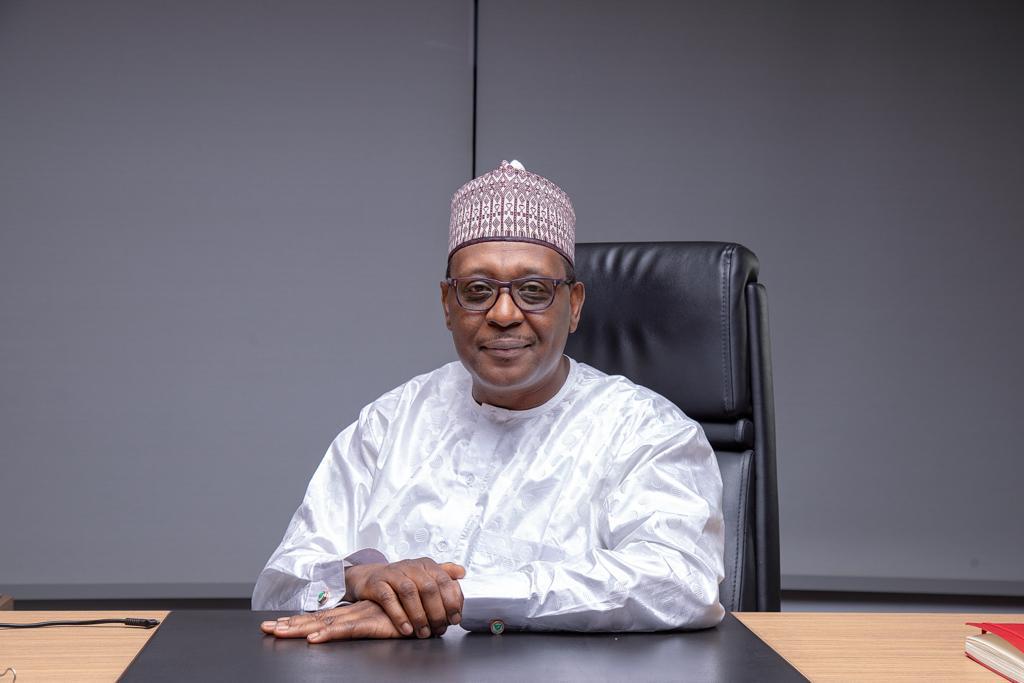
Muhammad Ali Pate is Nigeria’s Coordinating Minister of Health and Social Welfare.