







By Dayo Johnson, Rotimi Ojomoyela, Adeola Badru, Samuel Oyadongha, Egufe Yafugborhi, Ozioruva Aliu, Ike Uchechukwu, Ochuko Akuopha, Jeff Agboddo, & Daniel Abia
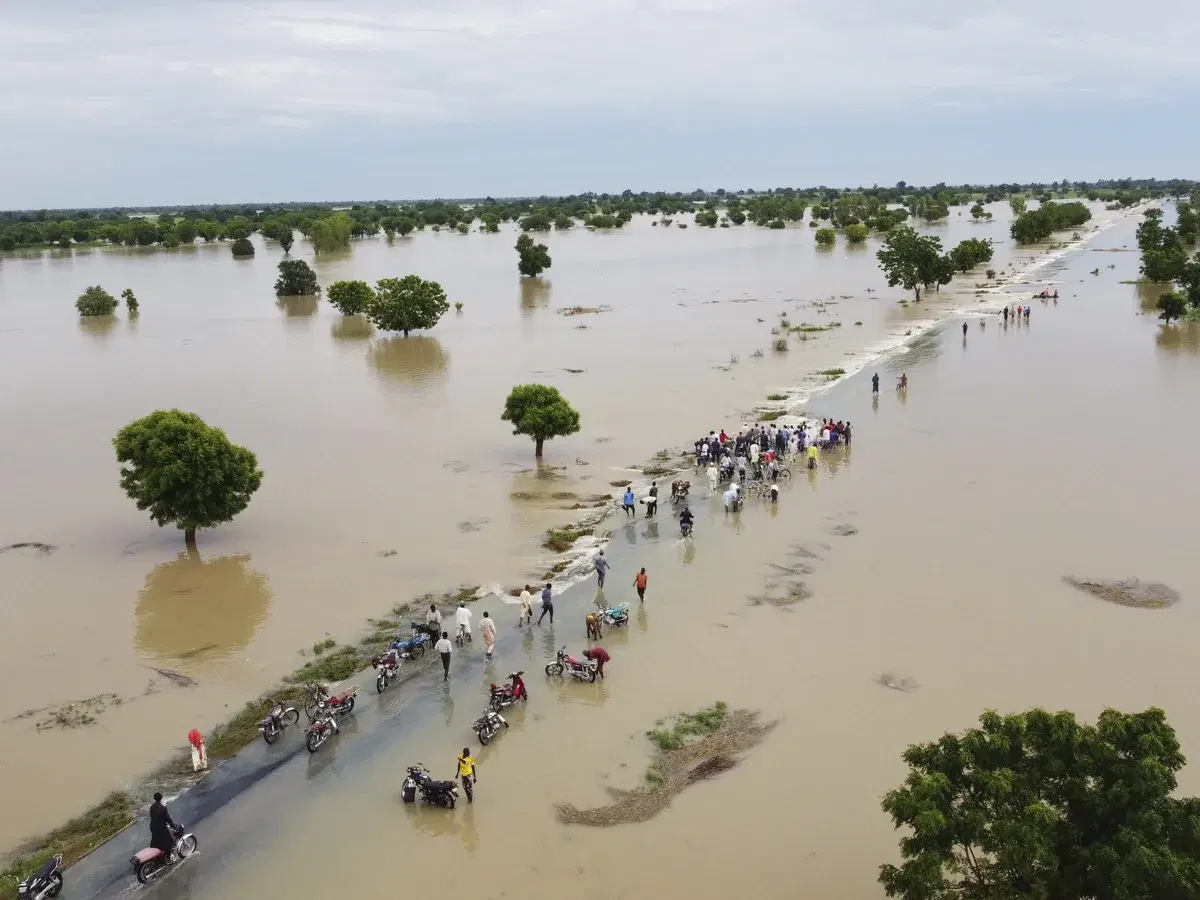
What began as days of persistent rainfall has quickly escalated into widespread flooding across several states, leaving a trail of destruction that has once again exposed Nigeria’s vulnerability to seasonal disasters. From the South-West to the South-South, communities have watched helplessly as swollen drains overflowed, roads disappeared beneath muddy waters, homes and businesses were inundated and livelihoods disrupted.
The flooding has affected both urban centres and rural communities, with Ondo, Ekiti, Oyo, Bayelsa, Delta, Rivers, Cross River and Edo among the states recording varying degrees of devastation following recent torrential rainfall. While no large scale loss of life has been reported in many of the affected states, residents have suffered heavy economic losses as property worth millions of naira was destroyed, commercial activities grounded and transportation severely disrupted.
For many residents, the latest flooding has become an annual reminder of the consequences of poor urban planning, blocked drainage channels, indiscriminate refuse disposal and unchecked construction along waterways.
Environmental experts have repeatedly warned that the increasing intensity of rainfall, compounded by climate change, will continue to overwhelm existing drainage infrastructure unless governments invest more aggressively in flood control and environmental management.
The recent incidents have also renewed concerns over the country’s level of preparedness, especially as the peak flooding period, usually between August and October in many parts of Nigeria, is yet to arrive. Emergency management agencies have intensified public enlightenment campaigns and begun assessing vulnerable communities, while state governments have accelerated the clearing of drainage channels and waterways in an effort to minimise the impact of future rainfall.
Yet, despite these efforts, residents insisted that preventive measures often come only after communities have already suffered avoidable losses.
ONDO: Battle against rising floodwaters
In Ondo State, several communities, including Akure, Owo, Okitipupa, Ilaje and Ese Odo Local Government Areas, were badly affected after days of torrential rainfall triggered widespread flooding.
Homes and business premises were submerged, while major roads became impassable as floodwaters cut off vehicular and pedestrian movement in several parts of the state.
An assessment carried out by officials of the National Emergency Management Agency, NEMA, revealed that blocked waterways, indiscriminate dumping of refuse and illegal structures erected along river channels significantly worsened the flooding.
Speaking during an inspection of Eyinala community in Akure, NEMA’s Head of Operations in Ondo State, Mr Kazeem Olanrewaju, warned that many more communities remain vulnerable if urgent preventive measures are not implemented.
According to him, the assessment conducted jointly with the Ondo State Emergency Management Agency showed that several affected communities are located along obstructed waterways where illegal buildings and accumulated waste have drastically reduced the natural flow of water.
He urged the state government to intensify enforcement against illegal developments and sustain the clearing of blocked canals before the rains become heavier.
The state government acknowledged the seriousness of the situation, warning that buildings erected on designated setbacks and flood plains would be demolished in line with physical planning regulations.
Residents of the affected communities appealed for urgent intervention, saying they are forced to remain indoors whenever heavy rain falls because roads leading to their homes become completely flooded.
Many also called for continuous desilting of drainage channels rather than seasonal interventions that begin only after flooding has already occurred.
EKITI: Flooding disrupts life in Ado, Ekiti
In neighbouring Ekiti State, the capital, Ado Ekiti, experienced one of its worst episodes of flash flooding this rainy season after prolonged rainfall submerged major roads and paralysed economic activities.
Among the hardest hit locations were the Ayemi Garage bridge along Iworoko Road, Faglo Road, Olorunda and the Federal Polytechnic Road axis, where overflowing rivers and blocked drainage channels left motorists and commuters stranded for several hours.
Commercial activities slowed considerably as traders closed their shops early while transport operators suspended operations on several flooded routes.
Many workers returning home after the day’s activities spent hours waiting for floodwaters to subside before continuing their journeys.
Residents described the flooding as both frightening and economically devastating, lamenting that businesses continue to suffer whenever heavy rainfall occurs.
Some motorists abandoned their vehicles and sought alternative routes after floodwaters completely covered sections of major roads, while commercial motorcycle operators suspended operations to avoid accidents.
Many residents attributed the recurring flooding to inadequate drainage infrastructure and called on government to expand existing drains and ensure regular maintenance before the peak rainy season.
Ekiti State government said it has continued dredging rivers, valleys and major drainage channels identified as flood prone while also intensifying public awareness campaigns against indiscriminate refuse disposal.
Authorities urged residents to comply with weather advisories and promptly report emergencies whenever flooding occurs.
OYO: Residents count losses
In Oyo State, particularly in parts of Ibadan, residents are still counting their losses after heavy rainfall caused drainage channels to overflow into residential neighbourhoods.
Although entire communities were not submerged, the force of the floodwaters damaged fences, invaded homes and destroyed household property worth millions of naira.
Residents around the Iwo Road axis narrated how floodwaters surged through their neighbourhood in the early hours of the morning, collapsing perimeter fences and forcing water into apartments.
Many blamed blocked drainage channels filled with refuse for aggravating the disaster.
Victims appealed to the state government to sustain the desilting of drainage channels while enforcing environmental sanitation laws against indiscriminate waste disposal.
Officials of the state government said efforts to reduce flooding remain ongoing through routine clearing of drainage systems and sustained public sensitisation.
They stressed that residents also have a responsibility to keep drains free from refuse, warning that blocked waterways remain one of the leading causes of flash flooding across urban centres.
BAYELSA: Panic as floods return
In Bayelsa State, flooding is more than a seasonal occurrence; it has become a way of life for many communities. Situated in the heart of the Niger Delta and crisscrossed by rivers and creeks, the state experiences some of the highest levels of rainfall in the country, making it one of Nigeria’s most flood vulnerable states.
Although the annual overflow of the River Niger and its tributaries has yet to reach its peak, recent torrential rains have already triggered flash flooding in parts of Yenagoa, the state capital, and surrounding communities.
Unlike the annual floods caused by overflowing rivers, residents said the latest incidents were largely the result of blocked drainage channels that prevented storm water from flowing freely.
In low lying communities, homes were inundated after hours of rainfall, while residents struggled to move around flooded streets.
For many families, the flooding served as an early warning of what could happen later in the year when river levels begin to rise.
Officials of the Bayelsa State Directorate of Flood and Erosion Control said recent inspections uncovered dozens of drainage channels that had either been blocked by refuse or encroached upon by illegal developments.
Communities
The discovery underscored the growing challenge posed by indiscriminate waste disposal and poor environmental practices, which continue to worsen flooding even before the annual river overflow begins.
To reduce the impact of the rains, the state government has intensified desilting operations using swamp buggies to clear major drainage channels across Yenagoa and adjoining communities.
Authorities have also identified higher grounds in vulnerable communities that could serve as temporary shelters should severe flooding force residents from their homes during the peak rainy season.
Environmental experts say Bayelsa’s geographical location means flooding cannot be completely prevented, but insist that better drainage maintenance, stronger environmental enforcement and improved urban planning can significantly reduce its impact.
DELTA: Communities remain on alert
In Delta State, rising water levels along the River Niger and adjoining creeks have heightened anxiety across several riverine communities, although widespread flooding has yet to occur.
Communities in Ndokwa East, Oshimili South, Isoko South and Ughelli South Local Government Areas have continued to monitor the gradual rise in river levels following weeks of persistent rainfall.
Residents said that while flooding is usually expected later in the rainy season, they are already taking precautionary measures to safeguard homes, farms and other property.
Many recalled previous years when floodwaters displaced thousands of people and destroyed crops, forcing families into temporary shelters.
Mindful of the forecasts issued by the Nigerian Meteorological Agency, NiMet, Delta State government has commenced the clearing and desilting of drainage channels and canals across vulnerable communities.
Officials said the intervention is intended to improve the free flow of water before rainfall intensifies further.
Residents welcomed the government’s response but urged authorities to sustain the exercise throughout the rainy season rather than limiting it to emergency interventions.
RIVERS: Residents fear repeat of last year’s flooding
In Rivers State, fresh rainfall has renewed fears of another round of destructive flooding, particularly in Port Harcourt and surrounding communities that have experienced repeated flash floods in recent years.
Residents of the Choba area complained that poor drainage around a recently constructed road has worsened flooding whenever heavy rain falls.
They said the drainage channels are too narrow to accommodate the volume of storm water generated during prolonged rainfall, resulting in roads becoming submerged within a short time.
Officials of the National Emergency Management Agency, however, said the flood situation remains under control, although vulnerable areas continue to be monitored closely.
Communities around the Orashi River basin have been placed under observation because of the gradual increase in water levels.
Within Port Harcourt metropolis, authorities said desilting of major canals and drainage channels carried out in recent months has helped reduce flooding in some locations that were severely affected last year.
The agency added that it has intensified public sensitisation campaigns in collaboration with the Rivers State Government, community leaders and local government authorities to improve preparedness before the peak flood season.
C/RIVER:Blocked drainage worsens flooding
Findings in Cross River State, showed that residents of Efut Efio Ene community in Calabar South blamed years of neglected drainage infrastructure for repeated flooding after heavy rainfall.
Community leaders said storm water from different parts of Calabar now flows into the area but cannot empty into the river because the drainage outlet has remained blocked for years.
As a result, even moderate rainfall now leaves homes, roads and public spaces inundated.
Residents lamented that flooding has continued to erode buildings, destroy property and create serious public health concerns.
The Cross River State Emergency Management Agency acknowledged the problem and said government has directed relevant agencies to address the blocked drainage channel.
Residents, however, appealed for immediate action, saying they have heard similar promises in previous years while flooding continues to worsen.
Although other flood prone areas of the state have yet to record serious incidents this year, experts warned that the experience of Efut Efio Ene demonstrates how poor drainage maintenance can transform ordinary rainfall into a major disaster.
EDO: Govt steps up preparedness
Unlike several neighbouring states already battling severe flooding, Edo State has largely escaped major incidents despite weeks of heavy rainfall.
Nevertheless, residents of communities traditionally affected by flooding, including Illushi, Udaba, Anegbete and parts of Etsako Central and Esan South East Local Government Areas, remain apprehensive.
Many residents said the recent rainfall has already caused rivers to swell, raising fears that flooding could intensify in the coming weeks.
Learning from previous experiences, the Edo State Emergency Management Agency, EDOSEMA, in collaboration with NEMA and the Nigerian Red Cross Society, has intensified flood preparedness campaigns across vulnerable communities.
The sensitisation exercise focused on educating residents, particularly farmers and those living near flood plains, on the importance of heeding early warning advisories and relocating from high risk areas whenever necessary.
Disaster
Officials stressed that disaster preparedness remains the most effective means of reducing flood related losses and urged residents to promptly report emergencies through designated emergency channels.
A familiar cycle demanding lasting solutions
The recent flooding across several states has once again highlighted Nigeria’s perennial struggle with seasonal disasters. While the intensity of rainfall continues to increase, experts insist that many of the losses suffered every year are avoidable.
Across the affected states, the same issues continue to recur, blocked drainage channels, indiscriminate dumping of refuse, unregulated construction on waterways, poor urban planning and inadequate maintenance of flood control infrastructure.
Although governments have intensified desilting exercises, public enlightenment campaigns and emergency preparedness efforts, residents argue that such interventions should be sustained throughout the year rather than activated only after flooding occurs.
With the peak of the rainy season still weeks away in many parts of the country, emergency agencies have warned that more communities remain vulnerable to flooding.
For thousands of Nigerians already counting their losses after the recent torrential rains, the message is clear.
Flooding is no longer simply a seasonal inconvenience. It has become a recurring national challenge that demands sustained investment in drainage infrastructure, stricter environmental enforcement, better urban planning and stronger community participation if lives and livelihoods are to be protected from future disasters.
EBONYI: Flood, rainstorm submerge market, destroy farmlands
A week-long torrential rainfall accompanied by windstorm has destroyed shops and farmlands in parts of Ebonyi State, leaving traders and farmers counting their losses.
The persistent rainfall caused severe flooding that submerged the International Market in Abakaliki, destroying goods displayed outside shops. It also submerged farmlands in Akpoha and Amasiri communities, as well as parts of the Afikpo Daily Market.
A trader at the Abakaliki International Market, Mr. Jude Orji, said several shops and wares were destroyed as floodwaters penetrated many shops, while the accompanying windstorm ripped off roofs.
“The rainstorm caused extensive damage. Many shop owners lost valuable goods, while traders dealing in foodstuffs and electrical appliances recorded huge losses after their products were soaked by rainwater,” he said.
Another victim, Mrs. Victoria Nwodom, said all the wares she displayed outside were destroyed by the rainfall and appealed to the government to provide alternative trading spaces during the rainy season.
“We are the worst hit by this week-long rain. The flood always comes as a surprise. Some of us cannot afford shops or warehouses, so we display our wares outside, making us more vulnerable,” she said.
Emergency
Affected farmers also lamented that the flood destroyed yam, cassava, maize, rice and other crops after they had invested heavily in the current planting season.
One of the victims, Mr. Okpani Okoh, said the flood washed away their farms, forcing many to consider replanting if the water recedes. He appealed to the Ebonyi State Emergency Management Agency, SEMA, to assess the damage and provide assistance.
Another farmer, Mr. Chukwuma Oti, said the flood destroyed a farm on which he spent over N4 million.
“We cannot stop farming because it is our occupation. We need government support to cushion our losses,” he said.
Ebonyi State Commissioner for Environment, Mr. Sylvester Nwengwu Nwite, said government had repeatedly warned residents in flood-prone and riverine communities to relocate temporarily during the rainy season.
He said the state is addressing flooding at the International Market by re-channeling waterways and considering landscaping the area to improve water flow.
Nwite also urged traders to stop blocking drainage channels with refuse, saying poor waste disposal contributes significantly to flooding in the market.