


•••as Senate probe lingers 6 months after
•••How police, others shared N15bn, by Coordinator
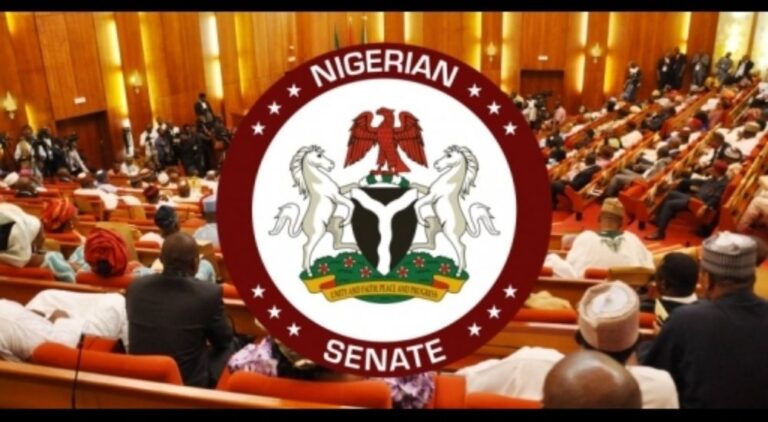
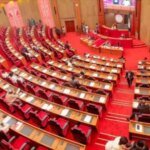
What happened to the $30 million (approximately N144 billion) contributed by the Nigerian government in collaboration with international partners as part of efforts to secure schools against attacks and abductions? This is the question the Senate is attempting to answer amid kidnapping spree by terrorists across the country which does not spare schoolchildren. Section 88 (2) of the 1999 Constitution empowers the Senate to carry out oversight functions on government Ministries, Department and Agencies (MDAs).
With this mandate, senators are expected to ensure the MDAs do not short-change Nigerians in service delivery. The supervision was also designed to check the abuse of due process by government departments and agencies in contract awards and executions. It was created to further ensure strict compliance with extant laws of the country, especially in the application of public funds. Against this backdrop, the Senate, in December 2025, began a probe into alleged failure of $30 million (N144 billion) Safe Schools Initiative, SSI, a programme launched in 2014 to protect students, teachers, and schools from attacks and insecurity. It was generally created to ensure that children learn in a safe environment.
Attacks:
Sunday Vanguard learnt the Senate action was informed by the increasing terrorist attacks on schools. The ad hoc committee was saddled with the responsibility of carrying out a holistic investigation into the funds, what was received, how they were spent, who got what and to find out if the funds were channeled into proper use. At the time the panel was inaugurated, the seizure of 25 female students from Government Girls Comprehensive Secondary School, Maga, Kebbi State, and over 200 others from St. Mary Catholic School, Niger State were the latest in the series of incidents. The attacks raised concerns about the effectiveness of the SSI, which had been allocated over N144 billion (approximately $30 million). Stressing the need for the probe in an urgent motion, former Senate President and Chairman of the Committee on Defence, Senator Ahmad Lawan, APC, Yobe North, called for a full audit. “Since schools are still not safe, we must investigate the funds released and how they were utilised,” he noted.
$30 million:
Consequently, President of the Senate, Senator Godswill Akpabio, constituted an 18-member ad hoc committee chaired by Senator Orji Uzor Kalu, APC, Abia North. Other members include Senators Tony Nwoye, NDC, Anambra North; Yemi Adaramodu, APC, Ekiti South; Harry Ipalibo, Rivers West; Ede Dafinone, APC, Delta Central; Mustapha Saliu, APC, Kwara Central; Diket Plang, APC, Plateau Central; Binus Yaroe, Adamawa South; Shehu, Kaka, Borno Central and Musa Garba Maidoki, APC, Kebbi South. The Senator Kalu-led committee was given the mandate to probe the programme with a view to uncovering why it has failed to stop mass kidnappings and attacks on educational facilities, despite over $30 million in funding. The panel was mandated to scrutinize how the initial donor funding, as well as other allocations, was spent since 2014. It was given four weeks to submit a detailed report and recommendations that would help overhaul the SSI. Launched in May 2014 following the Chibok schoolgirls’ abduction, the Safe Schools Initiative was designed as a government–UN–private sector partnership aimed at securing schools in high-risk zones. Initial funding was $10 million. Funds mobilized between 2014 and 2021 were over $30 million (N144 billion). Despite major investments and a multilayered policy framework, including the Safe Schools Declaration, SSD, and the National Policy on Safety, Security and Violence-Free Schools, NPSSVFS, schools remain targets of attacks.
Investigation:
The committee wasted little time in commencing its assignment. To aid its investigation, it summoned key stakeholders, including then Minister of Finance and Coordinating Minister of the Economy, Wale Edun; Minister of Education, Prof. Tunde Alausa; Minister of Defence, General Christopher Musa; Commandant-General of the Nigeria Security and Civil Defence Corps (NSCDC), Dr Ahmed Audi; state governors, civil society organisations and representatives of school proprietors. The objective was clear: Establish how funds allocated to the Safe Schools Initiative were raised, managed and spent, and determine why schools across the country remain vulnerable despite years of intervention and substantial financial commitments. One of the most revealing sessions took place on December 10, 2025, when the committee intensified its scrutiny of alleged financial irregularities, consultancy expenditures and the utilisation of funds released to implementing agencies.
N15 billion:
Particular attention was paid to the N15 billion released by the federal government in 2023, of which the Nigeria Police received the largest share of N6.225 billion. Appearing before the committee, the National Coordinator of Financing Safe Schools in Nigeria, Hajia Halima Iliya, traced the origins of the initiative to the 2014 abduction of the Chibok schoolgirls. She explained that the programme was launched by the administration of former President Goodluck Jonathan in collaboration with international partners as part of efforts to secure schools against attacks and abductions. According to her, the initiative attracted support from both local and international partners. Contributions to the Central Bank of Nigeria-domiciled Trust Fund included $10 million from the federal government, another $10 million from Nigerian business leaders, $1 million from the African Development Bank, €2 million from the German Government and $4 million from the Norwegian Government, managed through UNICEF. Additional funding came through the UN Multi-Donor Trust Fund involving agencies such as UNICEF, UNDP, UNOPS, USAID and the Qatar Foundation. She further explained that the initiative was overseen by a steering committee co-chaired by the Secretary to the Government of the Federation and the UN Special Envoy on Education, with the governors of Adamawa, Borno and Yobe states, relevant ministries, emergency agencies and prominent business leaders among its members.
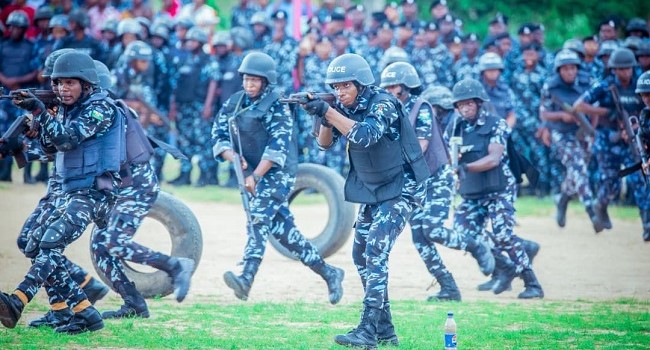
The committee also heard that the N15 billion released in 2023 was shared among several security and educational agencies. The Nigeria Police was said to have received N6.225 billion, the NSCDC N3.362 billion, Defence Headquarters N2.250 billion, while the Federal Ministry of Education got N519 million among others. The amount allocated to the Department of State Service was not publicly disclosed during the hearing. In another revelation, Hajia Iliya informed lawmakers that no allocation was made for Safe Schools financing in either the 2024 or 2025 budgets. According to her, efforts to secure inclusion in the 2024 budget cycle came too late for consideration. The hearing, however, took a dramatic turn when lawmakers began questioning expenditure patterns and consultancy costs. Senator Oluranti Idiat Adebule expressed concern that consultancy and operational expenses appeared to account for almost half of N4.44 billion reflected in documents before the committee. “You have used almost half of N4.44 billion for consultancy and operational expenses and spent about N4 billion on the project itself. Don’t you think that is why you are not getting another budget?” she asked. Hajia Iliya responded that the documents being referenced related to expenditures from 2014 rather than the 2023 funding cycle. “This document I presented is out of respect for this committee. The document you are reading is for 2014, not 2023,” she said. The explanation did little to calm tempers. “You’re not doing us a favour. Please withdraw that statement,” Senator Adebule fired back. Other lawmakers also voiced concerns. Senator Musa Maidoki questioned the rationale for allocating additional funds to security agencies already receiving annual appropriations from the national budget, arguing that Safe Schools’ resources should be directed towards communities where the threats are most severe.
Misappropriated:
Similarly, Senator Kenneth Eze expressed doubts about the credibility of some of the financial submissions before the committee. “Funds have been misappropriated and we need to know. Anyone can draft this. The calculation of expenses raises serious concern, especially the amount spent on consultancy,” he said. At the end of the session, Senator Kalu directed officials handling Safe Schools financing to return with a comprehensive breakdown of all funds received and expended, details of contractors engaged under the programme and complete documentation relating to the CBN Trust Fund account. The committee, he insisted, would not proceed without clear and verifiable records. Yet while the investigation continues, insecurity in schools remains a grim reality.
Schools:
On June 3, 2026, the Senate was again forced to confront the consequences of the country’s failing school security architecture when it considered a motion sponsored by Senator Abdulfatai Buhari on the abduction of teachers and pupils in Oyo State. The motion followed the kidnapping of more than 40 teachers, pupils and students from schools in Ogbomoso and Oriire communities on May 15, 2026. The incident drew widespread condemnation from lawmakers, who described the attack as another disturbing reminder of the dangers facing schoolchildren across the country. In response, the Senate called on the federal government and security agencies to intensify rescue efforts and strengthen the Safe Schools Initiative through enhanced surveillance, intelligence gathering and improved security deployment around vulnerable schools and communities.